
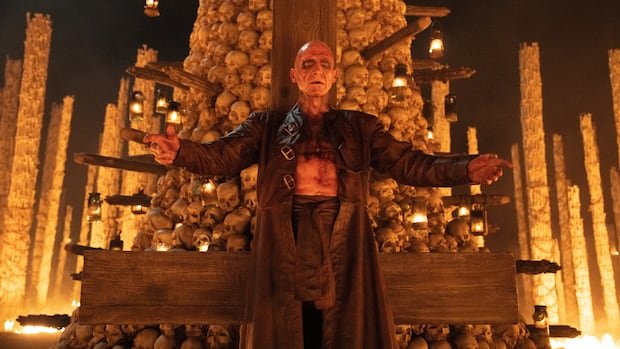
In history, there are parallels to Nia DaCosta’s film “28 Years Later: The Bone Temple.” Consider the account of the first two European settlers in Australia who transformed into a ruthless group of tormentors, led by a charismatic figure promising rewards for brutal acts. Another instance is from 1941, where two individuals on Belcher Island claimed divine status and orchestrated violent rituals. These narratives mirror the themes explored in DaCosta’s sequel, highlighting the corruption of communal values for malevolent purposes.
“The Bone Temple” presents a disturbing narrative filled with gore, sadism, and religious extremism, challenging viewers with its intense content. While some may find it overwhelming, the film offers more than just action and performances. It delves into the origins of systematic cruelty, its appeal to leaders, and strategies to combat it effectively.
To grasp the sequel’s significance, viewers must recall the previous film’s conclusion, where a virus turns people into cannibals, leaving survivors isolated. The story now follows a group led by Sir Jimmy Crystal, a cult leader reminiscent of a pirate captain, who instigates violence in the name of charity. The film questions the leader’s beliefs and explores themes of regret and desperation through various characters, including the towering zombie Samson and the enigmatic Dr. Kelson.
As the plot unfolds, the film unveils complex relationships and symbolic themes, particularly critiquing religious narratives that justify violence. Through nuanced characters and dark atmospheres, “The Bone Temple” serves as a thought-provoking commentary on the manipulation of ideologies to justify brutality. Despite its bleak tone, the film offers a message of resistance against oppressive systems, urging viewers to retain their humanity amidst chaos and uncertainty. In its exploration of disturbing themes, the film delivers timely insights and rewards attentive audiences with its profound commentary on human nature.

