
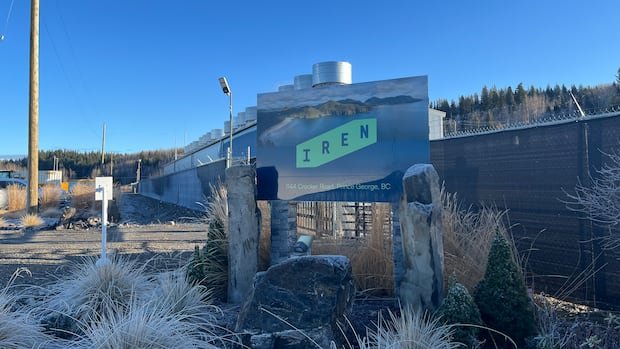
A major shift is underway for the company managing three significant data centers in northern British Columbia and the Kootenays. Originally focused on bitcoin mining, the Australia-based company Iren is now transitioning to AI data storage. This strategic move has led to a remarkable 350% surge in its stock price, reaching a valuation of $13 billion US. However, this transition coincides with the implementation of new regulations in the province regarding power access for AI data centers.
Kent Draper, the Chief Commercial Officer at Iren, explained that the company initially designed its facilities with versatility in mind, allowing for a seamless transition to AI operations as the demand for AI services increased. At their Prince George site, both bitcoin miners and AI servers are currently active in the same data halls. The Prince George facility, with a 50-megawatt capacity, shifted its focus to AI data storage 18 months ago and is undergoing enhancements to accommodate more graphics processing units (GPUs) exclusively for AI operations.
Upgrades are also in progress at Iren’s Mackenzie and Canal Flats sites. Draper anticipates that the shift to AI will create more job opportunities in the region, as AI data storage requires more labor compared to bitcoin mining. Currently supporting 60 permanent positions across the Prince George and Mackenzie sites, Iren plans to triple its workforce, offering about 100 temporary construction roles during the expansion phase.
The company was initially attracted to British Columbia due to its access to hydroelectricity and the favorable cooling conditions provided by the region’s cold climate. However, recent policy changes announced by the province prioritize power allocation for natural resource projects, requiring AI data centers to compete for power resources. B.C. Hydro will initiate this process in early 2026, allocating 300 megawatts to AI projects and 100 megawatts to other data centers over a two-year period.
These policy adjustments also entail a permanent ban on new cryptocurrency connections in British Columbia. The changes aim to align power distribution with the province’s economic objectives, emphasizing job creation and local benefits while remaining within the allocated energy capacities for specific sectors. Kate Harland from the Canadian Climate Institute supports these reforms, highlighting the potential advantages of AI data centers over crypto mining in terms of infrastructure development, employment opportunities, and computing capabilities.
Draper acknowledged that Iren’s expansion in bitcoin operations will be restricted by the new regulations, but the company was already focused on transitioning to AI storage. Despite regulatory constraints, Iren remains committed to operating and growing in British Columbia. Draper emphasized the importance of market-driven resource allocation over government intervention, noting that Iren will continue its upgrades in the province throughout the upcoming year.

