
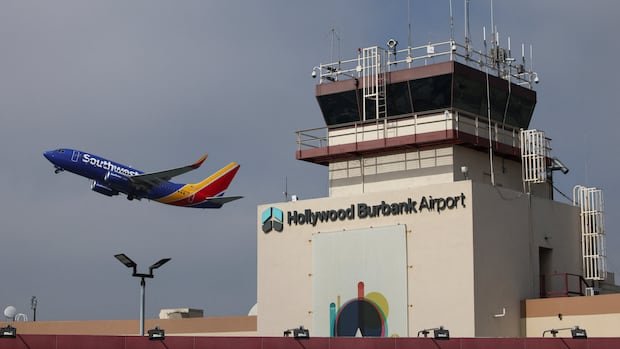
Amidst the daily communication between pilots and air traffic control, one of the least desired responses for a pilot is likely to be “the tower is closed due to staffing.” This was the unfortunate situation faced by a pilot at Hollywood Burbank Airport in Southern California on Monday as they were preparing for takeoff and seeking coordination for their departure. The incident was captured on audio by LiveATC.net and highlighted in a report by CNN.
The air traffic control tower at Burbank Airport was temporarily unmanned on Monday, adding to the list of incidents at U.S. airports resulting from staffing shortages during the government shutdown. The Federal Aviation Administration (FAA) issued an advisory indicating that flights at Burbank airport experienced approximately a two-hour delay due to the lack of air traffic controllers in the tower.
According to an FAA spokesperson cited in the L.A. Times, the tower remained without staff from around 4:15 p.m. to 10 p.m. local time, during which a San Diego-based air traffic control facility took over the management of air traffic in the area.
The ongoing government shutdown, initiated due to a funding deadlock, has led to widespread service disruptions and the placement of hundreds of thousands of civil servants on furlough.
As questions arise about the impact of these events on passenger safety and the potential resolution, it is crucial to assess the risks associated with the unstaffed tower at Burbank. Although having an empty air traffic control tower may seem concerning, reports suggest that the situation primarily resulted in logistical challenges and flight delays. Operations continued using procedures typically employed at small airports without control towers. TRACON, the San Diego-based facility, remotely managed air traffic, while pilots had to coordinate amongst themselves during taxiing, as reported by Business Insider.
NATCA expressed concerns about the vulnerability of the aviation system in the face of a nationwide shortage of essential safety personnel, emphasizing the fragile nature of the aviation infrastructure. Operations at Burbank resumed on Tuesday, as confirmed by Reuters.
The FAA has reassured the public that the air traffic control system remains safe, despite the staffing issues caused by the shutdown. However, concerns persist over the financial strain on air traffic controllers who continue to work without pay. Transportation Secretary Sean Duffy highlighted a significant increase in controllers taking sick leave and noted a 50% reduction in staffing levels in some areas since the start of the shutdown.
The uncertainty surrounding paychecks and financial obligations has left controllers grappling with additional stress, raising questions about their ability to maintain safety standards. The Canadian Air Traffic Control Association (CATCA) warned of potential strains on morale, retention, and absentee rates within the workforce as the shutdown persists, impacting safety margins and operational efficiency.
The repercussions of the staffing shortages were felt across several airports, including Newark, Phoenix, Denver, Las Vegas, and Burbank. Flight delays and operational adjustments were observed at Nashville and Newark airports, among others, as confirmed by the FAA. FlightAware reported over 4,000 flight delays on Monday, with subsequent delays and cancellations continuing into Tuesday, affecting both domestic and international flights.
CATCA highlighted the likelihood of cross-border travel disruptions affecting Canadian airspace due to delays or flow restrictions resulting from the situation in the U.S.
Given the historical context of similar incidents, the aviation industry faces challenges as the shutdown prolongs, with past experiences indicating a potential breaking point in operational efficiency. Authorities are urged to resolve the shutdown promptly to allow aviation safety professionals to focus entirely on their critical responsibilities.

