
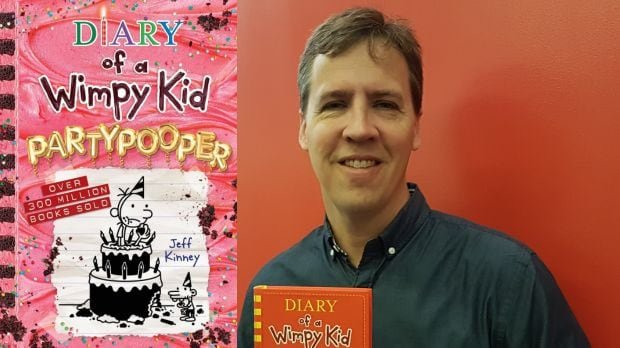
Jeff Kinney, the American author behind the hugely successful comic book series “Diary of A Wimpy Kid,” is no stranger to triumph. In a recent conversation with Antonio Michael Downing on “The Next Chapter,” Kinney shared insights into the creation of his beloved children’s series. The latest release, the 20th installment titled “Partypooper,” features a note on the cover boasting “over 300 million copies sold,” though Kinney humorously clarified that this number is more for aesthetic appeal than actual sales figures.
When asked to describe Greg and his family to someone unfamiliar with them, Kinney depicted them as ordinary individuals with a quirky twist, inspired by his own family dynamics but exaggerated for comedic effect. The characters are intentionally imperfect, flawed, and prone to making mistakes, which Kinney finds enjoyable to write about.
Reflecting on the series’ origins in 1998, Kinney revealed his initial aspiration to become a newspaper cartoonist akin to Charles Schulz or Bill Watterson. After facing discouragement and rejection in that pursuit, he transitioned to a different approach by transforming his journal entries, resembling the format of “Diary of A Wimpy Kid,” into a work of fiction. This transition took about eight years, culminating in the series’ debut in 2006.
Kinney emphasized the importance of consistency in character design, aiming to maintain the visual integrity of the cast over the series’ evolution. The enduring youthfulness of protagonist Greg throughout the books symbolizes the stability and reliability that cartoons offer in an ever-changing world, providing readers, especially children, with a familiar and constant presence.
In crafting Greg’s emotional journey, Kinney aimed for a realistic portrayal of flaws and imperfections, eschewing the traditional heroic archetype often found in children’s literature. By presenting relatable characters who grapple with everyday challenges, Kinney seeks to connect with readers on a personal level, much like a stand-up comedian sharing vulnerabilities to evoke recognition and empathy.
Kinney’s own childhood experiences, marked by a sense of observation rather than protagonism, heavily influenced the creation of Greg and his adventures. Drawing from his personal mishaps and humorous anecdotes, Kinney infuses authenticity and humor into the series, capturing the essence of being an average kid navigating the ups and downs of adolescence.
The interview concluded with Kinney highlighting the incorporation of his own blunders and comedic incidents into the books, underscoring how his mistakes serve as a primary source of inspiration and livelihood. This candid reflection on his past foibles underscores Kinney’s dedication to crafting authentic and relatable storytelling that resonates with readers of all ages.

