
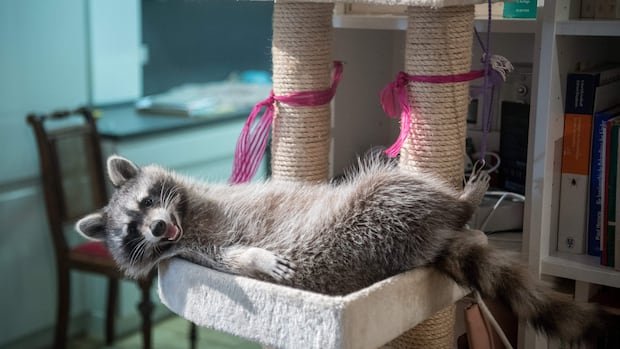
A recent study delves into the impact of urban environments on raccoons. Typically associated with cities, these medium-sized animals are known for their distinctive markings and scavenging habits. Despite their urban presence, raccoons are originally inhabitants of forests and woodlands, where they consume a varied diet including corn, nuts, berries, insects, clams, and fish.
Native to the Americas, raccoons are prevalent in all Canadian provinces except Newfoundland and Labrador, with occasional sightings reported in the latter. Researchers have uncovered intriguing insights into raccoon behavior in urban settings. Urban raccoons appear to be adapting to city life, potentially undergoing a process of domestication influenced by their proximity to human environments.
The concept of domestication involves the gradual adaptation of wild animals to coexist closely with humans for various purposes. Unlike common pets such as dogs, which began the domestication process thousands of years ago, raccoons are in the early stages of domestication. Recent studies indicate physical changes in urban raccoons, notably shorter snouts, which could be attributed to their evolving interactions with human-dominated environments.
Biologists have observed similar evolutionary patterns in various species living near humans, leading to traits that enhance their survival chances. Urban raccoons may be displaying neoteny, retaining juvenile characteristics into adulthood, and exhibiting increased tolerance towards humans. These findings shed light on the profound impact of human presence on wildlife, potentially steering raccoons towards traits that facilitate cohabitation.
While some individuals keep raccoons as pets, experts caution against this practice due to health risks associated with wild raccoons, which can carry pathogens and parasites harmful to humans. The process of raccoon domestication is still in its infancy, with researchers intrigued by the evolutionary changes observed in urban raccoon populations. Looking ahead, the future appearance and behavior of raccoons in urban settings could undergo significant transformations over time.

