
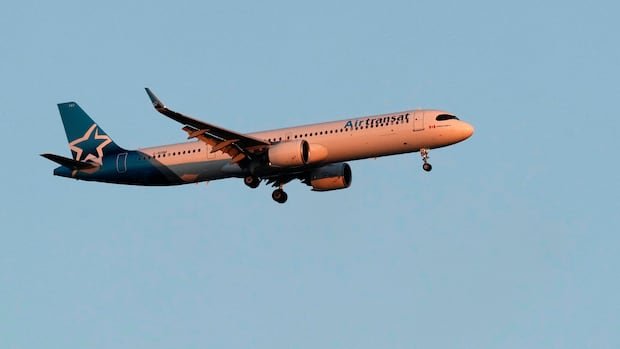
The union representing Air Transat’s pilots announced on Wednesday that its members have voted overwhelmingly to authorize a strike. While this gives the union’s governing body the power to declare a strike as early as December 10, it does not serve as an immediate strike notice, according to the Air Line Pilots Association (ALPA).
Air Transat emphasized that this is a routine step in the collective bargaining process and assured that operations are running as usual. The company stated, “The objective remains to negotiate a collective agreement that meets both parties’ needs, aligns with market conditions and the company’s realities, and acknowledges the pilots’ contributions. We are optimistic about reaching an agreement to prevent any disruptions to our customers’ travel plans,” as reported to CBC News.
Negotiations between ALPA and the airline commenced in January, three months before the existing collective agreement was due to expire. The union representative highlighted the aim to secure a collective agreement that safeguards job security and enhances working conditions, compensation, and quality of life. Over 99 percent of the pilots who participated in the ballot voted in favor of a potential strike, the union confirmed.
Both parties concluded conciliation on November 18 and are presently in a 21-day cooling-off period set to conclude on December 10, according to the union. Bradley Small, chair of the Air Transat ALPA master executive council, stated in a press release, “This vote sends a strong message to Air Transat management: We are united, determined, and deserve a contract that reflects current industry standards.” Small further expressed in an interview with CBC News that the current contract for Air Transat pilots falls short compared to agreements held by WestJet and Air Canada pilots.
In a related context, Air Canada pilots recently approved a four-year collective agreement that raised their wages by approximately 42 percent cumulatively, and WestJet’s pilots negotiated a 24 percent pay increase over four years in 2023, setting a new benchmark for labor gains in the aviation sector.
Karl Moore, an airline expert and associate professor at McGill University’s Desautels Faculty of Management, noted that the strike authorization vote was anticipated, given the strategic timing over the busy holiday season. Moore suggested that a strike threat during peak revenue periods would push Air Transat to seek a resolution.
Despite the possibility of a strike, Moore pointed out that it would create challenges for pilots and their families, underscoring the mutual interest in avoiding such an outcome. He speculated that a strike might be averted, although government intervention with back-to-work legislation could be a potential scenario due to the strike’s economic impact and disruption to travel schedules.
In conclusion, while the strike mandate has been granted, the situation remains dynamic, with efforts focused on negotiation to reach a mutually satisfactory resolution and avert any disruptions in air travel services.

