
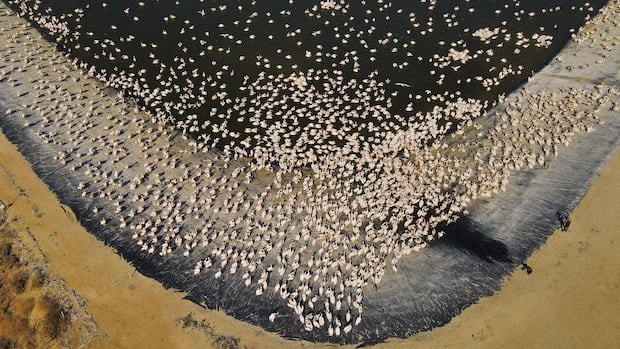
If you’ve ever gazed at those V-shaped formations of geese and pondered where they are headed and what they encounter on their journey, a newly deployed satellite now has the ability to accurately map their route.
Following a three-year hiatus due to the conflict between Russia and Ukraine, the International Cooperation for Animal Research Using Space (ICARUS) project, designed to monitor wildlife from space, was relaunched on Nov. 28 onboard a SpaceX Dragon spacecraft.
This initiative, which involves scientists from various countries, utilizes small transmitters attached to animals such as birds, zebras, sea turtles, and even insects to monitor their interactions with each other and their surroundings.
Conceived in 2002 by Martin Wikelski, a biologist at the Max Planck Institute of Animal Behavior, the project was envisioned as “The Internet of Animals.” Thousands of these transmitters have been attached to animals, with ground-based receivers collecting the data and transmitting it to researchers, leading to the publication of numerous scientific studies.
Having a satellite-based receiver allows for data collection from inaccessible areas like mountain peaks, dense jungles, and remote northern regions, expanding the project’s reach beyond what ground-based receivers can achieve.
In 2020, the first space-based receiver was activated as an experimental antenna on the Russian segment of the International Space Station. During tests, ICARUS successfully tracked the movements of hundreds of animals from various species worldwide, such as the common cuckoo. However, operations were suspended in 2022 due to the Russia-Ukraine conflict.
“The initial data from Icarus demonstrates that with increased dedication, establishing a global network of animal monitors is feasible,” stated Wikelski in a press release.
Recent advancements have led to the miniaturization of the receiver to 10 centimeters in size, utilizing less energy and enhancing sensitivity to track multiple animals simultaneously. This technology has been integrated into a CubeSat, a compact satellite, which was launched into space on Nov. 28 alongside several other CubeSats from different nations.
Data Reveals Environmental Challenges Faced by Wildlife
Efforts have also been made to downsize the transmitters affixed to the animals themselves. The latest versions weigh just four grams and can be attached even to small birds. Future iterations are anticipated to be small enough for insect deployment.
These devices transmit GPS locations as well as behavioral and health data of the animals, recording environmental factors like temperature, humidity, and air pressure. This comprehensive data not only tracks animal movements but also the environmental conditions they encounter and their interactions with each other.
Aggregate data from numerous animals can aid in monitoring environmental changes such as tree growth, ocean currents, and glacier melting, and has even been utilized to monitor earthquakes in remote regions.
All data is transmitted by the satellite to Movebank, a global database for tracking animal movements, accessible to researchers worldwide for insights into various animal interactions.
“This is why we call it the Internet of Animals. We aim to connect researchers and their animal subjects because the combined sensor data provides more than the sum of its parts,” explained Wikelski in an interview earlier this year.
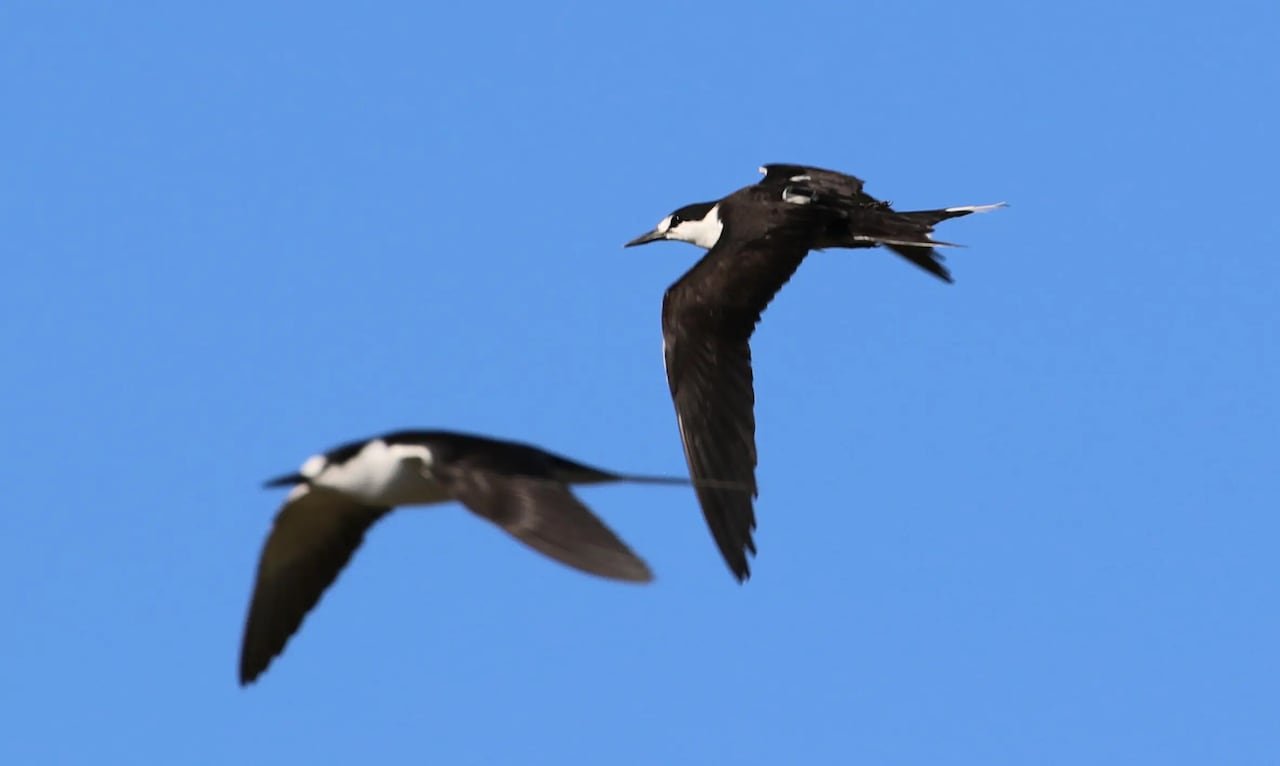
The recent launch is just the beginning, as the team plans to deploy multiple satellites by 2027, providing real-time global coverage through the ICARUS project.
Understanding these migration routes is crucial, as they have existed for centuries and human development, converting natural habitats into urban landscapes, can obstruct these pathways.
For instance, many migrating waterfowl need water-rich areas like marshes, ponds, or lakes for resting during their journeys. Human alterations to these landscapes can disrupt these natural rhythms, requiring birds to expend more energy to find suitable resting spots.
Besides migration patterns, the monitoring extends to animals’ interactions with human settlements and natural environments within their habitats.

