
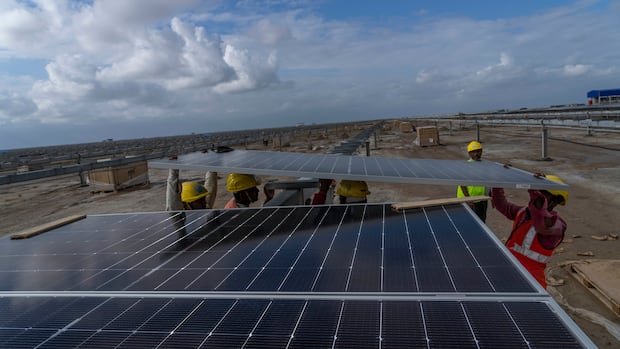
A recent analysis reveals that global solar and wind power production has surpassed electricity demand this year, marking the first time in history that renewable energy sources have generated more power than coal. The report by energy think-tank Ember indicates that solar generation surged by 31% in the first half of the year, while wind generation saw a growth of 7.7%.
The combined solar and wind generation increased by over 400 terawatt hours, exceeding the overall global demand growth during the same period. Renewable sources accounted for 34.3% of global electricity generation in the first half of 2025, surpassing coal’s share at 33.1% for the first time.
This milestone suggests the feasibility of transitioning away from polluting energy sources by investing in renewables like solar, wind, hydropower, bioenergy, and geothermal energy. Ember’s senior electricity analyst, Malgorzata Wiatros-Motyka, emphasized that renewables can meet the rising global electricity demand.
While total fossil fuel generation experienced a slight decrease of less than one percent, Wiatros-Motyka noted the significance of this shift in emissions trends. The analysis covers data from 88 countries, representing a large portion of global electricity consumption.
Factors contributing to the rising demand include economic growth, increasing use of electric vehicles and data centers, expanding populations in developing nations, and the need for more cooling as temperatures rise. Meeting this demand through fossil fuel combustion releases greenhouse gases, leading to severe climate impacts.
China and India emerged as leaders in renewable energy adoption, with China adding more solar and wind power than the rest of the world combined. Both countries witnessed a drop in emissions amid record growth in clean energy production. Conversely, the U.S. faced challenges as its clean energy sector contended with policy shifts favoring fossil fuels under the Trump administration.
Experts caution that obstructing renewable energy growth could lead to supply-demand imbalances and hinder efforts to reduce emissions. Despite these challenges, there is optimism that renewables can continue displacing fossil fuels, especially on a global scale.

