
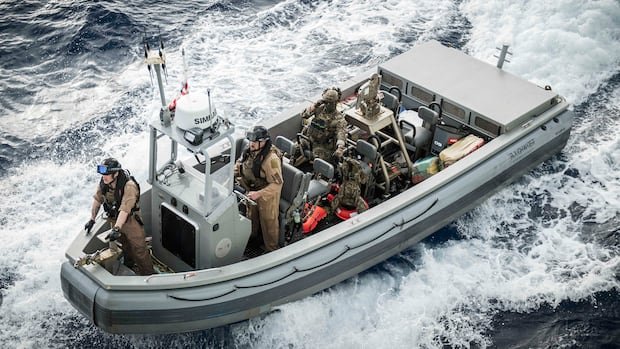
Canada’s Department of National Defence has confirmed its commitment to the ongoing joint operation with the U.S. Coast Guard in the Caribbean to intercept drug smugglers, despite recent deadly U.S. airstrikes in the region. Operation Caribbe, which has been in place since 2006, involves the Royal Canadian Navy and Royal Canadian Air Force collaborating with the U.S. Coast Guard to locate and halt suspected drug-carrying vessels in the Caribbean, apprehending individuals for prosecution in the U.S.
In contrast, the U.S. Air Force has conducted airstrikes on four suspected drug boats, resulting in the deaths of 21 individuals. Canadian authorities have distanced themselves from these actions, clarifying that they are not associated with Canadian military or intelligence operations in the area. Operation Caribbe forms part of a broader multinational initiative known as Campaign Martillo, which includes participation from 14 nations spanning the Americas to Europe.
Tim Addison, the director of naval affairs for the Naval Association of Canada (NAC), acknowledged the department’s attempt to differentiate between the operations but expressed concerns regarding the recent airstrikes and their potential implications. Scholars have raised questions about the legality of the strikes, with Human Rights Watch labeling them as “extrajudicial killings.”
Addison, a former naval officer, emphasized the importance of seeking clarification from the U.S. regarding the rationale behind the airstrikes, urging Canada to assess its involvement in Operation Caribbe based on these developments. The timing of the strikes amidst trade negotiations between Canada and the U.S. has added complexity to the situation, leaving the Royal Canadian Navy in a challenging position in the Caribbean.
Eric Ouellet, a defense studies professor, highlighted the delicate position Canada finds itself in following the airstrikes. He stressed the need for Canada to exercise caution and avoid involvement near Venezuela to prevent potential misuse of intelligence in unlawful operations. Ouellet suggested that Canadian assets are well-equipped to address other security concerns in the region, such as arms smuggling around Haiti.
The recent strikes have targeted designated terrorist organizations involved in drug trafficking, including groups like the Venezuelan gang Tren de Aragua. The U.S. has attributed the surge in drug activity to Venezuela, specifically its president, Nicolas Maduro, leading to heightened tensions between the two nations. Operation Caribbe has been successful in intercepting significant quantities of cocaine since its inception in 2006, contributing to anti-trafficking efforts in the region.

