
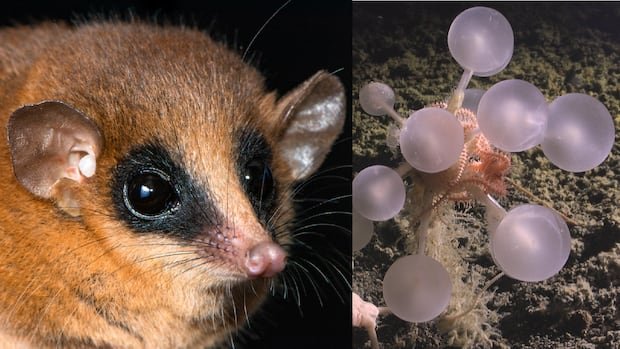
In 2025, the scientific community unveiled a fascinating array of newly discovered species, including a tarantula with remarkably long genitalia, a caterpillar that adorns itself with prey body parts, and a small opossum residing in mountainous regions. Research indicates that around 16,000 new species are identified annually, with an accelerating trend – 15% of all known species have been newly classified in the past two decades.
Although some of these species were previously documented locally or collected for museums, they had not been officially described by science until now. This documentation process is crucial for conservation efforts, as highlighted by ecology professor John Wiens from the University of Arizona. Recognizing and understanding these species is essential for their protection against extinction.
Among the new discoveries are four tarantula species in the Horn of Africa and Arabian Peninsula, with males boasting the longest genitalia among known tarantulas. The largest species, Satyrex ferox, features males with palps measuring up to five centimeters, almost as long as their legs. These extended palps may aid in maintaining a safe distance during mating to avoid female aggression.
Another intriguing find is a caterpillar in Hawaii, dubbed the “bone collector,” which inhabits spider webs, consumes trapped prey, and uses their body parts to construct a protective coat. This unique species, later metamorphosing into a moth, is found exclusively in a specific forest area, indicating potential endangerment.
The deep-sea exploration off the Southern Ocean near Antarctica yielded 30 new species, including the carnivorous “death-ball” sponge, equipped with spheres covered in tiny hooks for prey capture. Additionally, shallower waters unveiled a sea slug resembling fried eggs, known as Phyllidia ovata, preying on sponges and incorporating their toxins for defense.
In Canada, the discovery of the Okanagan crayfish in B.C.’s Okanagan Lake distinguishes it from the common signal crayfish due to the absence of a signature white mark on its claw. Furthermore, Canadian researchers revealed six new tube-nosed bat species from the Philippines, each weighing between four to 14 grams.
Other notable species include the Pinocchio chameleon from Madagascar and a wolf snake named after the late Steve Irwin from India’s Great Nicobar Island. Additionally, a tiny mouse opossum, Marmosa chachapoya, found in the Peruvian Andes, and live-bearing toads from the Eastern Arc Mountains of Tanzania were identified, showcasing the diverse and unique species discovered in 2025.

