
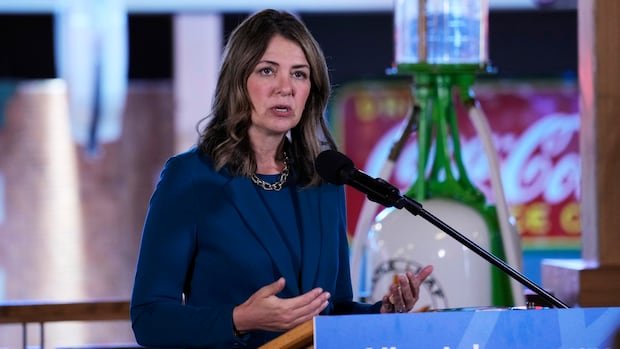
Alberta Premier Danielle Smith made headlines by announcing her government’s plan to seek approval from the federal Major Projects Office for a new oil pipeline to British Columbia’s northwest coast. The response to this announcement was swift and diverse, with various groups showing both support and opposition.
Smith wasted no time in presenting her case directly to British Columbia, emphasizing the importance of cooperation between the two provinces and the necessity of early and successful Indigenous consultations. However, initial reactions suggested a challenging road ahead, as some First Nations in British Columbia, including B.C. Premier David Eby, voiced their opposition to the proposed pipeline.
While the pipeline project lacks a specific route and a private entity to construct and operate it, it received enthusiastic backing from business groups and federal Conservative Leader Pierre Poilievre. This diversity of opinions underscores the significance of the proposal put forth by Smith.
Diverse voices have emerged in response to the announcement. Marilyn Slett, representing Coastal First Nations-Great Bear Initiative and Heiltsuk Tribal Council, expressed staunch opposition to the pipeline due to environmental concerns, citing a previous oil spill in the region. The Union of British Columbia Indian Chiefs echoed these sentiments, emphasizing the infringement on Indigenous rights.
On the business front, the Canadian Association of Petroleum Producers and the Business Council of Alberta endorsed the plan as a means to enhance economic growth and energy sector development. They highlighted the need for collaboration and engagement with Indigenous communities as essential components of the project’s success.
In contrast, climate and environmental groups, such as the Pembina Institute and Environmental Defence, raised concerns about the potential risks of the pipeline, emphasizing the need for a sustainable energy transition. Analysts from CIBC acknowledged the challenges ahead for the project, citing political and economic obstacles that must be navigated.
Amidst these varied perspectives, Clean Prosperity expressed conditional support for the pipeline, advocating for its alignment with decarbonization efforts to meet global and national climate goals. The discourse surrounding Smith’s proposal reflects the complex considerations and divergent viewpoints shaping the future of the oil pipeline project.

