
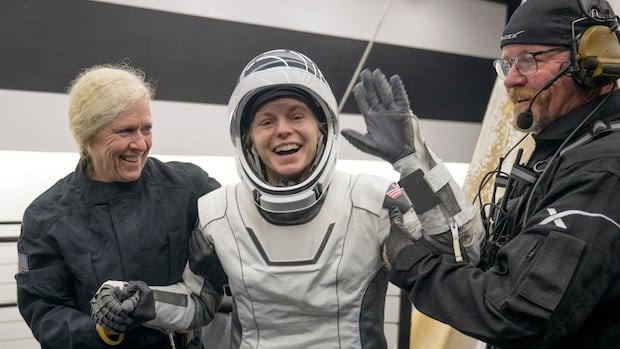
NASA’s Crew-11 has returned to Earth from the International Space Station (ISS) following a shortened six-month mission due to a crew member’s undisclosed medical condition. The SpaceX capsule guided the astronauts to a nighttime splashdown in the Pacific near San Diego, less than 11 hours after they left the space station.
The returning crew members included Cardman and NASA’s Mike Fincke along with Japan’s Kimiya Yui and Russia’s Oleg Platonov. The astronaut with the health issue has not been identified for privacy reasons. NASA administrator Jared Isaacman mentioned in a brief news conference after the landing that the affected astronaut was “doing fine,” with updates on their health to follow at an appropriate time.
Isaacman highlighted the success of the mission, noting the studies conducted on bone loss, microgravity effects, and cryogenic food storage in space. Joel Montalbano, NASA’s deputy associate administrator, confirmed that the health issue did not impact the undocking procedures.
After a standard observation period, the crew members are expected to spend a night in a San Diego hospital before traveling to NASA headquarters in Houston the following day. Dr. Farhan Asrar, associate dean at Toronto Metropolitan University’s school of medicine, described the early return as unprecedented in NASA’s history.
Despite the premature return, the ISS will continue its operations with three crew members remaining onboard. Crew-12, scheduled to launch on February 15, comprises NASA astronauts Jessica Meir and Jack Hathaway, Russian cosmonaut Andrey Fedyaev, and European Space Agency astronaut Sophie Adenot.
Looking ahead, NASA is gearing up for the Artemis II mission, which will include Canadian Space Agency astronaut Jeremy Hansen and others orbiting the moon. The mission is set for launch on February 6. Asrar emphasized the significance of crew safety in space missions, highlighting the agencies’ commitment to prioritizing astronaut well-being above all else.

