
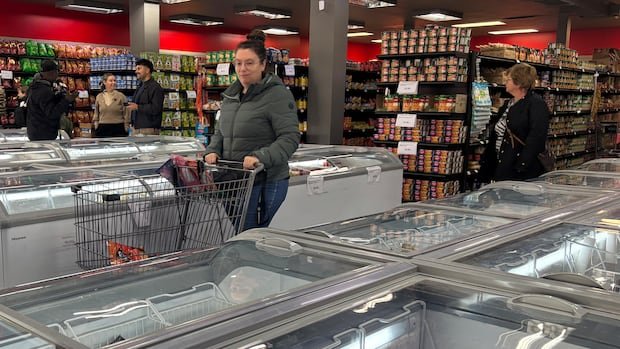
As living expenses continue to rise, Ron Robinson is committed to cutting costs, starting with his grocery spending. He frequents Liquidation Marie, a discount grocery chain in Montreal where prices can be up to 50% lower than regular supermarkets. Robinson recalls buying steaks for around six dollars each, a significant contrast to the $20 to $25 price tag at big box stores for a similar pack.
The trend of seeking bargains at liquidation-style grocery stores is gaining traction nationwide as Canadians grapple with high food prices. Bianca Amor’s Liquidation Supercentre and The Grocery Outlet in southern Ontario are examples of stores capitalizing on this demand. Liquidation Marie, established in 2012, has rapidly expanded its presence, with plans for ten new locations in 2026, bringing the total to 18 stores across Quebec.
Marie Eve Breton, co-owner of Liquidation Marie, attributes the store’s competitive prices to buying surplus or discounted food products from major retailers and offering them at discounted rates. The store’s inventory varies daily, featuring surplus or mislabeled items acquired at reduced prices. Despite the unpredictability, the store attracts around 30,000 customers weekly, with its Facebook bargains group boasting over 139,000 members.
The economic climate, marked by a more than 27% increase in grocery prices over the last five years, is driving the popularity of discount grocery stores. Families facing financial constraints are turning to alternative shopping options to stretch their budgets, with food costs becoming a significant concern. Dr. Yu Ma emphasizes that rising inflation is pushing consumers to explore more affordable shopping alternatives.
Discount grocery stores like Liquidation Marie not only offer savings to consumers but also contribute to reducing food waste in the supply chain. Sylvain Charlebois highlights that major retailers benefit from liquidation stores by offloading damaged or surplus stock at discounted rates. The acceptance of purchasing food past its best-before date is growing, with consumers realizing that many products remain safe and consumable beyond labeled dates.
The shift towards discount food shopping transcends socioeconomic levels, driven by increasing food insecurity and high prices affecting a broader demographic. Discount grocery stores are expected to gain further traction, with more consumers embracing the concept of purchasing near-expiry or surplus goods at discounted prices. This changing attitude towards food products’ expiry dates reflects a broader shift in consumer behavior, fostering a more sustainable approach to food consumption.

