
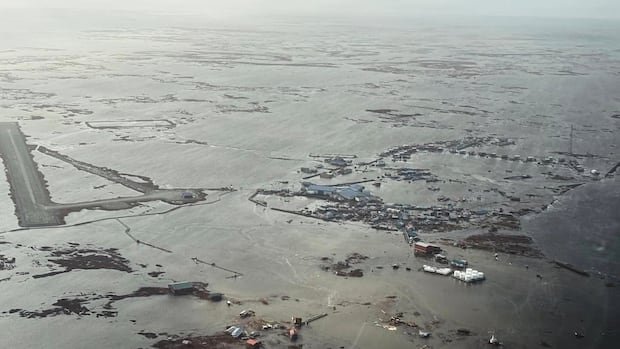
Rain and strong winds were predicted on Wednesday along the Alaskan coast following the devastation caused by the remnants of Typhoon Halong. Authorities were working urgently to find accommodations for over 1,500 individuals who were forced to leave their residences. The severe storm over the weekend brought fierce winds and storm surges that heavily impacted the low-lying Alaska Native communities situated along the Yukon-Kuskokwim Delta in the southwest region of the state, approximately 800 kilometers away from Anchorage.
Tragically, one person lost their life, and two others were reported missing. The Coast Guard conducted rescue operations, retrieving two dozen residents whose homes had drifted out to sea. Many displaced individuals sought refuge in school shelters, with some lacking basic amenities such as functioning toilets.
The inclement weather followed a previous storm that struck parts of western Alaska. The consecutive storms displaced over 1,500 people in the region. Many evacuees were transported to a shelter established at the National Guard armory in Bethel, a city with a population of 6,000. Plans were being considered to airlift evacuees to longer-term shelter or emergency housing in Fairbanks and Anchorage.
The most severely affected communities included Kipnuk, with a population of 715, and Kwigillingok, with a population of 380. These remote communities, off the state’s main road system, are accessible only by water or air during this time of the year.
Mark Roberts, incident commander with the state emergency management division, described the situation in Kipnuk as catastrophic during a press briefing. Residents, like Brea Paul from Kipnuk, witnessed numerous homes being swept away during the storm, feeling helpless as they watched the devastation unfold.
In Kwigillingok, one resident was found deceased, and the search for two missing individuals was called off. The community faced challenges, with the school being the only facility with full power but lacking functional toilets for the 400 people seeking shelter there.
Emergency response efforts were underway, with the National Guard aiding in relief operations. The focus was on delivering essential supplies like food, water, generators, and communication equipment to the affected areas. Officials emphasized the long path to recovery ahead for the hardest-hit communities and stressed the need for ongoing support.
Despite the resilience of Indigenous communities in Alaska, the widespread damage caused by the storm, compounded by the approaching winter, posed significant challenges. Experts noted the role of human-induced climate change in intensifying storms like Typhoon Halong and stressed the importance of immediate assistance and long-term recovery efforts for the affected regions.

