
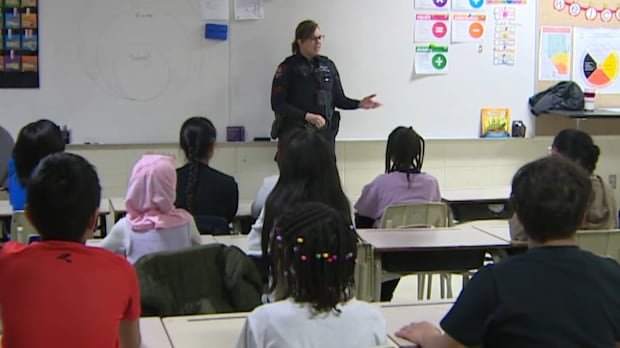
As the new school year begins, high school principal Heather Brown in Saanich, British Columbia, expresses her support for the return of police officers to Greater Victoria School District 61. Two years after the School Police Liaison Officer (SPLO) program was discontinued, Brown reflects on the valuable connection lost without the officers present. In the past, she collaborated with SPLOs to guide students away from gang involvement, a prevalent issue in the area, and witnessed positive outcomes with their help combined with family and community support.
Following a trend where many Canadian schools phased out police officer programs due to students feeling uncomfortable or intimidated, some communities are now reconsidering these programs due to a rise in school violence. Chief Const. Dean Duthie of the Saanich Police Department emphasizes the importance of officers building relationships with students, whether through sports events, safety presentations, or casual interactions in school settings.
Critics, such as Calgary parent Michelle Robinson, question the depth of these connections, highlighting concerns about officers’ limited presence across multiple schools and the potential negative impact on certain student groups like Indigenous students. Robinson advocates for alternatives like increased education funding and community resources to address underlying issues leading to violence.
Researcher Temitope Oriola from the University of Alberta highlights mixed perceptions of School Resource Officer (SRO) programs, emphasizing that BIPOC students and caregivers often report negative impacts compared to their Caucasian counterparts. Despite the popularity of these programs, Oriola’s upcoming study suggests a lack of concrete evidence linking SRO programs to improved school safety.
Lisa Gunderson, a parent in Victoria, stresses the importance of police officers fostering positive relationships with communities, especially in schools where they can serve as bridges between different groups. She calls for ongoing collaboration, feedback mechanisms, and training for officers on issues like racialized violence to enhance the effectiveness of police presence in schools.
In Toronto, students like Aaria Haji have had positive experiences with police officers visiting their schools, contributing to improved behavior and community engagement. Haji advocates for diverse community workers to interact with students, aiming to create a welcoming and inclusive school environment.
As discussions around police presence in schools continue, the focus remains on building trust, fostering positive interactions, and addressing the diverse needs and concerns within educational settings.

