
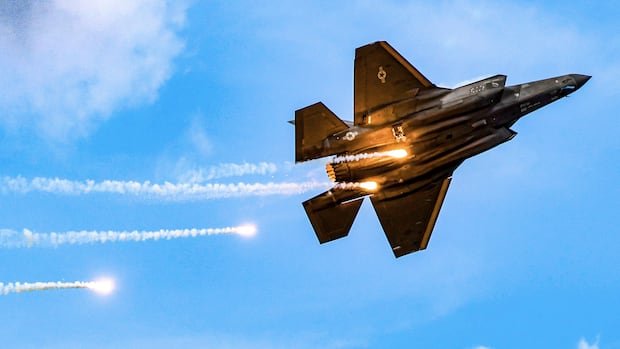
Canada remains committed to moving forward with the F-35 fighter program until further notice, according to a senior official from the Department of National Defence who testified before a House of Commons committee. Deputy Defence Minister Stefani Beck appeared before the committee to discuss the latest auditor general’s report on the increased costs associated with acquiring the stealth jet.
Following a review ordered by Prime Minister Mark Carney last spring on the $27.7 billion purchase from Lockheed Martin, a decision was expected by late summer on whether to proceed with the full purchase of 88 fighters or explore alternative options. However, as of now, there has been no update on the decision.
Beck informed the committee that the current directive is to continue with the existing contract arrangements until instructed otherwise. She emphasized the ongoing preparations to ensure infrastructure, pilot training, and other necessary components are in place for the arrival of the F-35s.
Canada has already committed to acquiring at least 16 F-35s, with initial payments made for four and deposits placed for eight more. The first batch of jets is scheduled for delivery next year to a U.S. air force base for training purposes. Beck reiterated that the final decision rests with the government, with public servants providing information to guide the decision-making process.
During the committee session, Conservative members expressed their support for the F-35 program and urged its progression. Lt.-Gen. Jamie Speiser-Blanchet, the new head of the Royal Canadian Air Force, addressed concerns about managing a mixed fleet of fighters due to the continued operation of CF-18s until the early 2030s. While acknowledging the challenges of operating two separate fleets concurrently, Speiser-Blanchet stressed the importance of transitioning to advanced fifth-generation fighters, citing the capabilities of potential adversaries like China and Russia.
Officials defended the significant cost increase in the program, attributing it partly to changes mandated by the United States. Delays and higher costs related to infrastructure upgrades at Canadian air force bases were also highlighted, along with the impact of foreign exchange fluctuations on the program’s overall expenses.
The timing of the prime minister’s decision remains uncertain, with ongoing discussions around the implications of maintaining a mixed fighter fleet. Despite concerns raised by U.S. Ambassador Pete Hoekstra, retired Canadian air force major-general Duff Sullivan emphasized that operational compatibility is achieved through shared tactics and procedures rather than uniform aircraft types.
In conclusion, the future of Canada’s involvement in the F-35 program awaits a final decision from the government, balancing operational needs, cost considerations, and strategic alignment with international defense partners.

