
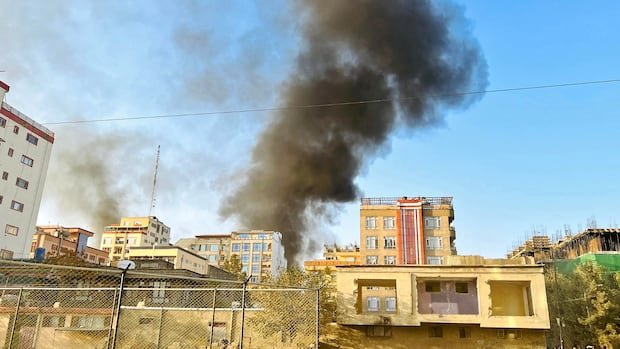
Afghanistan and Pakistan have reached an immediate ceasefire agreement, as announced by Qatar’s foreign ministry on Sunday. This agreement comes after more than a week of intense fighting that resulted in numerous casualties.
Both nations have agreed to establish mechanisms aimed at fostering long-term peace and stability. They have also committed to holding further discussions in the upcoming days to ensure the sustainability of the ceasefire, according to a statement from Qatar.
Delegations from Afghanistan and Pakistan convened in Doha for talks to address the deadliest conflict between them in several years. The mediation of these talks was facilitated by Qatar and Turkey.
The discussions, led by the defense ministers of both countries, focused on implementing urgent measures to halt cross-border terrorism originating from Afghanistan and to restore peace and stability along the border, as stated by Pakistan.
The recent violence, which led to casualties on both sides, escalated tensions as each country accused the other of aggression. Afghanistan refuted allegations of harboring militants responsible for attacks in border regions.
Amid the conflict, regional powers like Saudi Arabia and Qatar have urged for calm to prevent further destabilization in an area where groups like the Islamic State and al-Qaida are attempting to reemerge.
A 48-hour ceasefire to halt hostilities expired on Friday, after which Pakistan conducted strikes across the border into Afghanistan. Pakistani security officials confirmed the strikes on two districts in Afghanistan’s eastern Paktika province.
The targets of the strikes were hideouts of the Hafiz Gul Bahadur militant group, as reported by officials speaking on the condition of anonymity. The operation was in response to a suicide bombing at a security forces compound in Mir Ali, Pakistan, a day earlier.
While Pakistani officials claimed the strikes killed armed fighters with no civilian casualties, Afghan authorities reported the deaths of at least 10 civilians, including women, children, and local cricketers. The attacks prompted the Afghan national cricket board to boycott an upcoming series in Pakistan.
During funeral prayers in Paktika, attended by thousands, strong condemnation was voiced against the attacks, emphasizing the loss of innocent lives.
The Taliban government’s chief spokesperson, Zabihullah Mujahid, criticized the actions of Pakistani forces, accusing them of violating Afghanistan’s sovereignty and prolonging the conflict deliberately.
The two nations share a border known as the Durand Line, spanning 2,611 kilometers, although Afghanistan has never recognized it.
Pakistan faces escalating militancy, particularly in regions bordering Afghanistan, and has accused India, its nuclear-armed rival, of supporting armed groups without presenting evidence.
Pakistan’s army chief, Asim Munir, called on Afghans to prioritize mutual security over perpetual violence and to embrace progress over extremist ideologies. He urged the Taliban to control groups with sanctuaries in Afghanistan during an address at the Pakistan Military Academy in Kakul, Khyber Pakhtunkhwa.

