
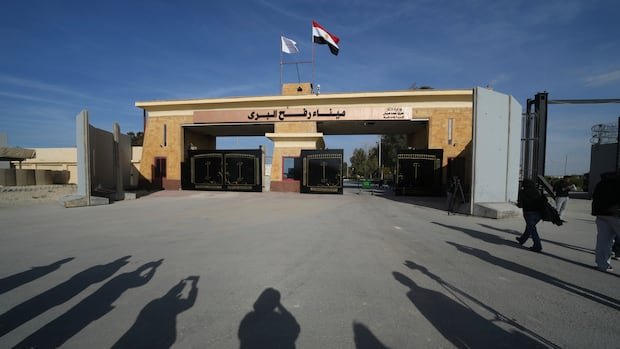
The Palestinian Embassy in Egypt announced that the Rafah border crossing between Gaza and Egypt will open on Monday for individuals returning to Gaza. However, the crossing will remain closed for those seeking to depart. Israeli Prime Minister Benjamin Netanyahu’s office quickly responded, stating that the Rafah crossing will not reopen until further notice, pending Hamas’s compliance in returning all deceased hostages. The Israeli Foreign Affairs Ministry previously indicated that the crossing might reopen on Sunday as part of the fragile ceasefire agreement.
The Rafah crossing was the only passage not under Israeli control before the conflict and has been shut since May 2024 when Israel took over the Gaza side. A fully operational crossing would facilitate Gazans in accessing medical care, traveling, and visiting relatives in Egypt, which is home to a significant Palestinian population. The operational responsibility for the damaged Gaza side post-war remains uncertain.
Hamas condemned Netanyahu’s decision to keep the Rafah crossing closed, labeling it a breach of the ceasefire terms and a renunciation of commitments to mediators. The closure hinders the entry of essential equipment to locate additional hostage bodies beneath the rubble, delaying the recovery process.
In Gaza, recovery efforts continue more than a week after the ceasefire, with the death toll surpassing 68,000, according to Gaza’s Health Ministry. Thousands are still unaccounted for, as reported by the Red Cross. The ministry’s casualty records, though not differentiating between civilians and combatants, are considered reliable by UN agencies and experts, despite disputes from Israel without presenting its own figures.
The U.S. State Department raised concerns about imminent planned attacks by Hamas against Gaza residents, emphasizing the violation of the ceasefire and demanding Hamas adhere to the terms. Israel’s military confirmed the reception of two deceased hostages’ remains from Hamas, a pivotal step in the ceasefire agreement.
Hamas accused Israel of ceasefire violations, citing ongoing attacks that resulted in Palestinian casualties. Meanwhile, aid demands from Hamas include increasing humanitarian aid flow, reopening the Rafah border crossing, and initiating Gaza’s reconstruction. Challenges persist with crossing closures and Israeli restrictions on aid groups.
Throughout the conflict, Israel controlled aid distribution to Gaza, prompting concerns of famine and malnutrition-related deaths. International reports confirmed deaths due to malnutrition, contradicting Israel’s accusations of aid theft by Hamas.

