
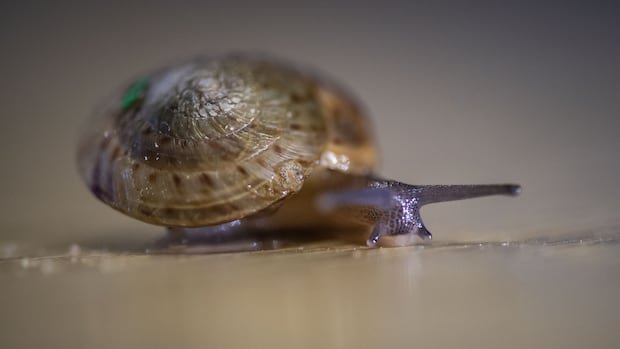
A decade ago, the sole surviving population of greater Bermuda land snails was found in an alley in Hamilton, the capital city, where they had settled on concrete slabs near a dripping air conditioner, creating a moist environment. Today, these native creatures seem to be flourishing in their natural habitat once more, thanks to the dedicated efforts of conservationists. Over the past seven years, more than 10,000 snails bred in captivity have been released into the protected wooded areas of the archipelago.
Katie Kelton, an invertebrate keeper at Chester Zoo in the U.K., expressed optimism about the snails’ progress, citing confirmed breeding and increasing numbers as signs of success. The collaborative initiative involving Chester Zoo, Biolinx Environmental Research in Canada, and the Bermuda government has been instrumental in rescuing the species from the brink of extinction. A forthcoming publication in Oryx, The International Journal of Conservation, will detail the achievements of this conservation program.
Despite these positive developments, the greater Bermuda land snails still face ongoing threats from habitat destruction and invasive predators, challenges that nearly wiped them out in the past. Recognized as critically endangered by the International Union for Conservation of Nature (IUCN), these tiny snails, measuring about the size of a button or a quarter, play a crucial role in Bermuda’s ecosystems as decomposers, aiding in nutrient recycling and providing a calcium source for natural predators like native birds and reptiles.
Kelton highlighted the aesthetic appeal of these snails, describing their intricate patterns and expressing her fondness for them. The successful reintroduction of the snails was recently celebrated by the IUCN during its Reverse The Red Day, acknowledging the efforts to combat biodiversity loss. While achieving this milestone was challenging, Kelton emphasized the team’s dedication and passion for conservation throughout the project.
Timothy Pearce, a mollusk curator at Carnegie Museum of Natural History, emphasized the importance of research in developing protocols for similar captive-breeding and re-wilding programs. While pleased with the snails’ reintroduction, Pearce cautioned that ensuring their long-term survival requires continued vigilance against predators. The re-introduced snails have shown promising signs of breeding and territorial expansion in protected woodland sites, demonstrating their adaptability to the local environment.
As the conservation efforts continue, maintaining the safety of the reintroduced colonies remains a priority. Kelton expressed gratitude for her involvement in safeguarding these beloved snails, underscoring the significance of giving the species a fighting chance despite their often-overlooked status in the natural world.

