
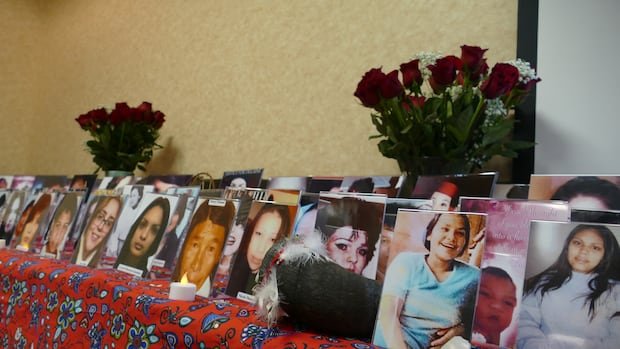
A fresh online platform and database showcasing narratives of over 400 Indigenous women, girls, two-spirit, and gender-diverse individuals who disappeared or were discovered deceased in Manitoba were unveiled in Winnipeg on Saturday — coinciding with the National Day of Action and Remembrance for MMIWG2S.
Known as Red Dress Stories MB, the initiative spearheaded by Giganawenimaanaanig, a local group committed to policy reform and advocacy for MMIWG2S+ in Manitoba, aims to pay tribute to the lives of those missing or murdered, provide support to families and communities, and raise awareness among the public, as stated on the website.
A key feature of Red Dress Stories MB is an interactive map covering the province, displaying red numbered circles and dress icons indicating locations where a loved one of someone went missing or was found deceased.
Alaya McIvor, an advocate and relative of an MMIWG2S+ person, painstakingly gathered data for each map point by engaging with families, compiling details such as each individual’s name, age, hometown, and last known whereabouts. With over two decades of experience in documenting missing and murdered Indigenous individuals, McIvor emphasized the importance of empowering families by amplifying their voices and assisting them in reclaiming their strength.
Jose Timog, a data analyst and web developer at Giganawenimaanaanig, expressed hope that the website would serve as a catalyst for positive change, shedding light on the magnitude of the MMIWG2S+ crisis to drive policy reforms and education initiatives. The data on the website reveals a notable rise in missing and murdered Indigenous women, girls, two-spirit, and gender-diverse individuals in the past five years.
According to the database, 61 individuals were reported missing or found deceased between 2020 and Oct. 5, 2025, whereas 62 MMIWG2S+ persons were documented in the preceding decade from 2010 to 2019. Timog stressed the urgency of educating the public about the escalating rates at which Indigenous women are disappearing or being killed, underscoring the significance of the project.
Timog pledged to continuously update the website, incorporating new stories, and highlighting historical cases from previous eras. Future plans for the platform include providing support resources for families and survivors along with links to educational materials like the National Inquiry into Missing and Murdered Indigenous Women and Girls’ final report and its 231 Calls for Justice.
Red Dress Stories website content is accessible in English, French, Ojibwe, and Cree, and is backed by several organizations, including the Ma Mawi Wi Chi Itata Centre, Ka Ni Kanichihk Inc., Wahbung Abinoonjiiag, and governmental bodies at both provincial and city levels.
McIvor and Anderson-Pyrz expressed hopes that the Red Dress Stories website would spark family-driven transformations within Manitoba and beyond, urging other regions to follow suit in documenting cases of missing and murdered Indigenous women, girls, two-spirit, and gender diverse individuals to ensure their stories are heard and honored. They emphasized the importance of acknowledging the value of Indigenous lives and ensuring their safety and well-being.

