
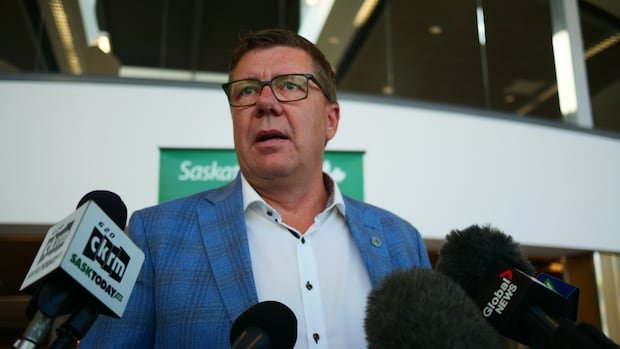
Premier Scott Moe’s recent endorsement of a proposed oil pipeline project, emphasizing that only the federal government should hold approval authority, has sparked reactions from experts and politicians nationwide. Alberta Premier Danielle Smith unveiled plans to seek approval for a new pipeline transporting bitumen from Alberta to British Columbia’s northwest coast. Concerns raised by British Columbia Premier David Eby and Indigenous groups prompted Moe to weigh in, stating that decisions on critical infrastructure like this rest solely with the federal government, emphasizing that the coast and ports belong to Canada, not just British Columbia.
This stance reflects the delineation of power between federal and provincial governments, according to Peter Graefe, a political science professor specializing in federalism at McMaster University. Graefe noted that premiers’ positions are often influenced by self-interest and the need to appeal to local voters, potentially undermining national unity.
In Saskatchewan, Premier Moe has advocated for greater provincial autonomy and exercised provincial rights by opposing the federal carbon tax. Saskatchewan has resisted Ottawa’s clean energy regulations, sparking ongoing disputes. The Premier’s shift in tone regarding federal supremacy over the proposed pipeline could erode trust, as citizens may question the consistency of commitments made by provincial leaders.
Saskatchewan NDP Leader Carla Beck criticized Moe’s remarks, urging him to focus on collaboration, consultation with Indigenous nations, and finding a constructive path forward. Meanwhile, British Columbia’s Eby labeled the pipeline project as “fictional,” highlighting its lack of financial viability, Indigenous consent, private support, and substantial costs.
Alberta’s proposal includes a $14 million commitment from the province, leading a technical advisory group involving Enbridge, South Bow, and Trans Mountain. The province aims to secure private sector involvement for pipeline construction, with the specific route yet to be determined. The application is slated for submission in the spring of 2026. Despite Prime Minister Mark Carney’s announcement of priority “nation-building” projects, no pipelines were initially included in the federal government’s plans.

