
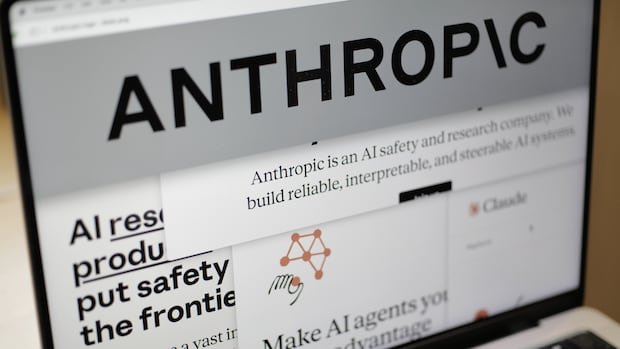
Anthropic, an artificial intelligence (AI) firm known for its Claude chatbot and initial emphasis on safety measures, seems to be revising its safety approach to maintain competitiveness. The company recently announced adjustments to its responsible-scaling policy, a framework of voluntary principles designed to prevent the emergence of potentially harmful AI technologies leading to substantial cyber threats.
While the updated guidelines affirm that Anthropic will still demand a “strong argument that catastrophic risk is contained” during AI development, they now indicate that progress will only be halted “until and unless we no longer believe we have a significant lead.” This implies that the company will continue advancing its technology if it perceives a competitive advantage over rivals.
According to Anthropic, this shift stems from a shift in focus from AI safety to economic opportunities in the United States. The company highlighted the slow pace of government actions related to AI safety compared to the prioritization of AI competitiveness and economic growth.
The alteration in Anthropic’s safety strategy coincides with the Pentagon’s threat to terminate contracts unless the company permits the use of its technology for all legal military purposes. Despite this, Anthropic asserts that the policy adjustment is not linked to the Pentagon issue.
Founded in 2021 by former OpenAI employees concerned about the prioritization of development over safety, Anthropic has maintained a staunch commitment to safety. CEO Dario Amodei has warned about the potential negative impacts of AI, emphasizing safety as the company’s top priority.
The company’s blog post emphasized the continuous evolution of its safety practices, with the latest iteration enhancing transparency and accountability through regular reporting and safety objectives. However, Heidy Khlaaf, Chief AI Scientist at the AI Now Institute, criticized Anthropic for focusing excessively on hypothetical catastrophic scenarios rather than addressing present-day risks like chatbot errors.
Khlaaf pointed out instances where the Claude chatbot was misused in fraudulent activities and data theft schemes, indicating gaps in Anthropic’s safety measures. She suggested that the company is shedding its safety-centric image to align with business interests.
The ongoing competition among leading AI firms, including Anthropic, OpenAI, and Google, underscores the industry’s rapid advancements and strategic collaborations with businesses and government entities. The U.S. government’s pro-AI stance, as advocated by the Trump administration, raises challenges for companies prioritizing safety over market dominance.
Teresa Scassa, Canada Research Chair in Information Law and Policy at the University of Ottawa, highlighted the dilemma faced by Canadian companies due to the absence of comprehensive AI regulations and the pressure to remain competitive with U.S. counterparts.
Despite facing pressure from the Pentagon, Anthropic clarified that the safety policy updates are distinct from the challenges posed by the Department of Defense. The company’s stance against the use of its technology in autonomous weapons and mass surveillance systems remains firm, despite potential contract cancellations.
In response to the Pentagon’s ultimatum, Anthropic reaffirmed its commitment to safeguarding against domestic surveillance and autonomous weaponry, signaling a willingness to transition to alternative providers if necessary. The company aims to maintain its principles amid evolving regulatory landscapes and technological advancements.

