
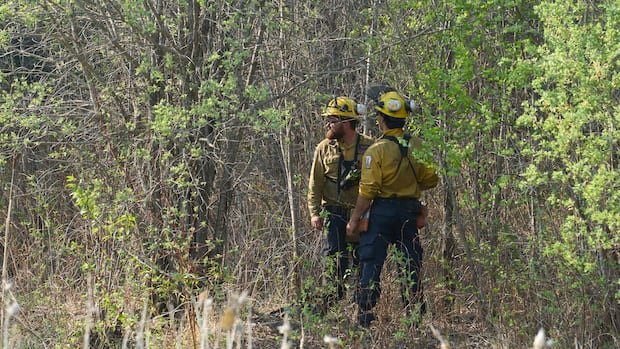
After extinguishing a wildfire, thick smoke emerges from smoldering areas, exposing firefighters to harmful chemicals for extended periods. This phase, highlighted by a former Manitoba wildland firefighter, poses a high risk of poor air quality.
The firefighter, whose identity remains confidential, expressed concerns about the black residue evident in their nasal discharge after battling wildfires. They emphasized the occupational hazard associated with firefighting in such conditions.
As Canada witnesses longer and more active wildfire seasons, experts caution about the detrimental effects of prolonged exposure to smoke. Christopher Pascoe, an associate professor at the University of Manitoba specializing in chronic respiratory conditions, recommends minimizing smoke exposure as much as possible.
In Manitoba, firefighters have been provided with disposable masks and training to mitigate the impact of air pollution. However, ensuring protection from wildfire smoke presents challenges due to the demanding nature of the job.
During strenuous 15-hour workdays, concerns about toxins in the air often take a back seat for firefighters. While bandanas offer some protection, exposure to wildfire smoke can lead to various health issues, including respiratory difficulties and increased risks of heart and lung diseases.
Although respirators can filter out dangerous particles, the Manitoba Government and General Employees’ Union highlights the practical challenges associated with their use. Bulky face coverings can impede firefighters’ performance and add to their physical strain during firefighting operations.
While disposable N95 masks are available to firefighters in Manitoba, ensuring proper fit and protection remains crucial. However, these masks may still allow hazardous gases to penetrate, especially during strenuous activities.
In British Columbia, strategies like rotating crews in smoky areas, thorough cleanup post-fire, and providing clean air spaces for resting help reduce smoke exposure. Respiratory protection is just one component of a comprehensive approach to safeguarding firefighters’ health amid escalating wildfire risks.

