
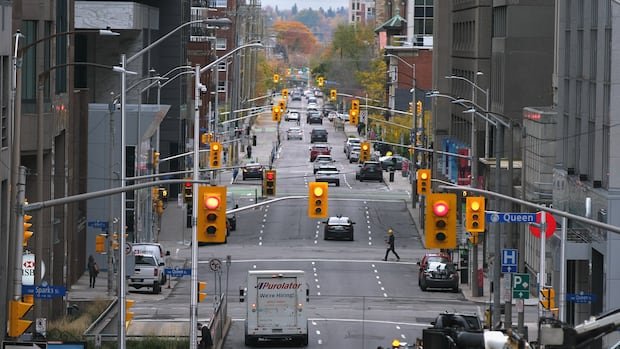
In a split-second moment familiar to every driver, the transition from a green to a yellow traffic light triggers a rapid assessment involving various factors like distance, time, velocity, and the presence of tailgaters. A miscalculation could result in a red-light camera citation or, worse, a collision.
Traffic engineers responsible for setting the duration of yellow lights, even those perceived as too brief, emphasize the scientific complexity behind traffic light programming. Jodie Marcyniuk, an acting senior leader for traffic management in Calgary, explains that the timing of amber lights and the “all red” phase are determined following established guidelines and considering driver behaviors at intersections.
Each intersection is treated as a unique case, with factors such as topography and speed limits shaping decisions on yellow light duration. Marcyniuk highlights the importance of stopping safely when facing a yellow light, emphasizing that attempting to rush through intersections can lead to risky scenarios and potential accidents.
At the Brock and Taunton intersection in Whitby, Ontario, senior traffic analyst Travis Stocking discusses the concept of traffic “platoons” where vehicles coordinate to reach green lights together. However, real-world variables can disrupt these planned traffic patterns, causing congestion and delays, especially when an intersection reaches its maximum capacity.
Engineers are cautious about setting overly long yellow light durations, as this can inadvertently encourage drivers to enter intersections later, potentially causing rear-end collisions. Driver behavior and attentiveness play a crucial role in navigating the yellow light phase safely, as it signifies the “indecision zone” where split-second decisions can impact road safety.

