
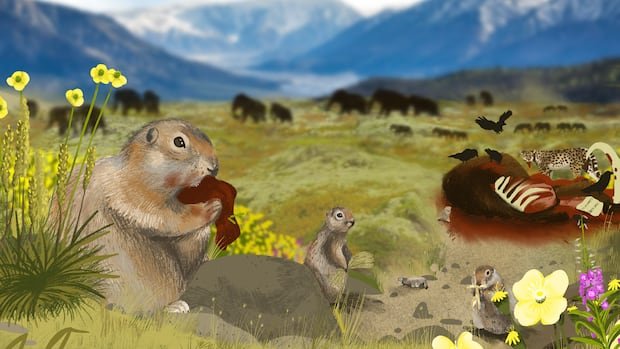
Researchers have decoded the genetic makeup of woolly mammoths, horses, steppe bison, and ground squirrels that inhabited the grasslands of the Canadian Arctic in the last ice age by analyzing DNA extracted from frozen squirrel excrement in the Yukon region.
The fossilized feces were rich in DNA from various animals, including wolves, mammoths, horses, birds, bats, and plants like sages and sedges, as detailed in a recent study published in Nature Communications. Tyler Murchie, a scientist at the Hakai Institute and the study’s lead author, highlighted the comprehensive insights into the ancient ecosystem obtained from these samples.
Arctic ground squirrels, over hundreds of thousands of years, created burrows containing a designated toilet chamber. Erosion along river valley walls has unearthed these chambers, preserving a mix of plant, bone, and insect fragments collected by the squirrels between 30,000 and 700,000 years ago.
Analysis revealed surprising amounts of mammoth and horse DNA in the squirrel feces, suggesting their ancestors had a diverse diet, consuming everything from nuts and seeds to carrion and even smaller animals. The DNA preserved in the coprolites provided a more concentrated and well-preserved source compared to bones and sediments.
The genetic analysis indicated a stable ecosystem on the dry mammoth steppe grasslands of eastern Beringia over 700,000 years during the Pleistocene epoch. The plant and animal species differed significantly from those inhabiting the wetter boreal forest ecosystems present in the region today.
The study’s findings underscore the importance of understanding past ecosystem changes in response to climate variations to predict the impacts of current climate change on Arctic wildlife. However, rapid thawing of sites containing ancient archives due to climate change poses a significant threat to preserving these invaluable records.
Experts like Danielle Fraser from the Canadian Museum of Nature and Prof. Kurt Kjær from the University of Copenhagen lauded the study for its contributions to understanding past climate change impacts. The research was supported by various funding sources, including the Tula Foundation and the University of Alberta Northern Research Awards.

