
A bustling drive-thru in suburban Detroit may seem ordinary at first glance, but upon closer listening, the voice taking orders is not human but rather artificial intelligence (AI). Fast-food chains across the United States are increasingly utilizing AI to manage their drive-thru operations, with the possibility of its adoption in Canada looming. While companies tout the enhanced accuracy of AI over human employees, concerns from labor advocates persist regarding the potential displacement of fast-food workers.
AI-driven drive-thrus began emerging as early as 2021, albeit facing challenges during pilot phases. Some customers intentionally tested the AI by making unusual requests or engaging in interactions that led to viral incidents. Despite initial setbacks, recent advancements in voice AI technology have led many fast-food chains to introduce chatbots at their U.S. locations. Notably, McDonald’s is trialing a Google-powered AI system for its drive-thru, while Taco Bell has teamed up with Nvidia for their chatbot solutions.
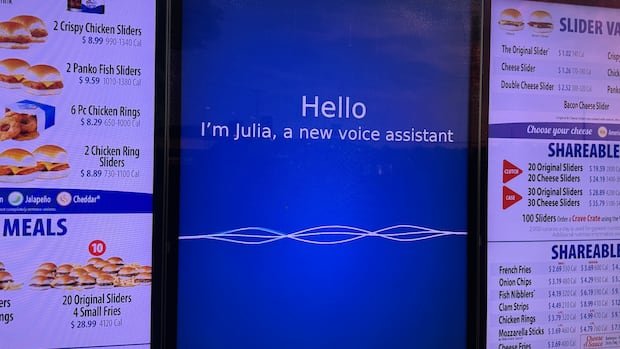
Two U.S.-based companies specializing in custom voice AI agents, Presto and SoundHound, anticipate the introduction of chatbots at Canadian drive-thrus in the near future, although specific plans remain unconfirmed by some fast-food entities. White Castle, a U.S. burger chain, collaborated with SoundHound to develop an AI chatbot named Julia, which engages with customers to take orders that are then displayed for staff preparation. Any discrepancies are addressed by human employees to ensure order completion.
Feedback on AI drive-thrus at the White Castle in Detroit varied among customers, with some finding it convenient and others expressing dissatisfaction. Despite concerns about job displacement, the technology’s use of generative AI allows for learning and improvement over time. White Castle’s chief marketing officer noted that data indicates the AI achieves high order accuracy rates, exceeding 90%.
White Castle has implemented Julia at approximately 40 locations, resulting in reduced drive-thru wait times and enabling staff to focus on other operational tasks. The company emphasizes that AI implementation aims to enhance productivity rather than reduce employment. The fast-food industry, grappling with labor challenges including rising costs and high turnover rates, sees AI as a strategic solution to address these issues.
SoundHound, the California-based developer of Julia, asserts that AI can enhance revenue by offering personalized upselling opportunities to customers. Industry trends indicate a growing adoption of AI-related tools among restaurant operators, showcasing the potential for increased efficiency and profitability. Voice AI companies like Presto envision widespread integration of voice-enabled drive-thrus in the coming years.
As automation continues to reshape the workforce, concerns arise regarding the potential impact on jobs like cashiers. Labor advocates stress the significance of involving various stakeholders in the design and implementation of AI systems, particularly to safeguard the interests of workers and communities. With the World Economic Forum predicting a decline in cashier roles due to automation, discussions around the responsible deployment of AI in workplaces become increasingly crucial.

