
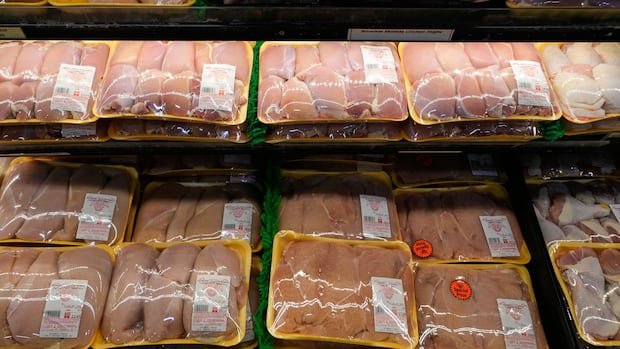
Canada’s inflation rate showed a slight decrease last month, but grocery prices are still on the rise, particularly when it comes to chicken thighs. According to Statistics Canada’s latest consumer price index (CPI) data, chicken thigh prices surged by 8.2% from May to June, significantly higher than the increases seen in beef and coffee. Year-over-year, chicken thigh prices spiked by 13.6% compared to the previous June.
Meanwhile, other grocery items that were causing concern for consumers due to high prices, such as cucumbers, tomatoes, and grapes, actually saw a decrease in prices from May to June. For example, boneless, skinless chicken thighs were priced at $22.18 for a club pack of nine at a Loblaws store in Toronto, while a Walmart in North Vancouver offered a value pack of Lillydale boneless, skinless chicken thighs for $22.48.
According to Michael von Massow, a food agriculture professor at the University of Guelph in Ontario, the increase in chicken prices is driven by demand. People are opting for more affordable protein options like chicken thighs as the overall cost of proteins rises. While chicken remains a more budget-friendly choice compared to beef, the prices of various chicken cuts, except for breasts, have been increasing. Statistics Canada’s retail data from May indicated that chicken breasts were the most expensive per kilogram at $14.58, followed by thighs at $13.72 and drumsticks at $7.29.
Sylvain Charlebois, the director of Dalhousie University’s Agri-Food Analytics Lab in Halifax, noted that consumers are shifting towards chicken thighs due to the escalating prices of beef. Although breast prices decreased slightly from May to June, drumstick prices went up. Charlebois highlighted that the chicken industry is facing pressure from increased demand driven by high beef prices, leading consumers to seek more economical protein options.
Despite the current challenges with protein prices, von Massow reassured that the chicken supply will eventually balance out the demand. While plant-based proteins are an alternative, they require more preparation time compared to meat options. However, von Massow pointed out that modern consumers have become less adaptable to changing their diets due to a decline in cooking skills and food knowledge.
In conclusion, the surge in chicken thigh prices reflects the broader trend of rising protein costs, prompting consumers to explore more affordable protein sources while keeping their food preferences in mind.

