
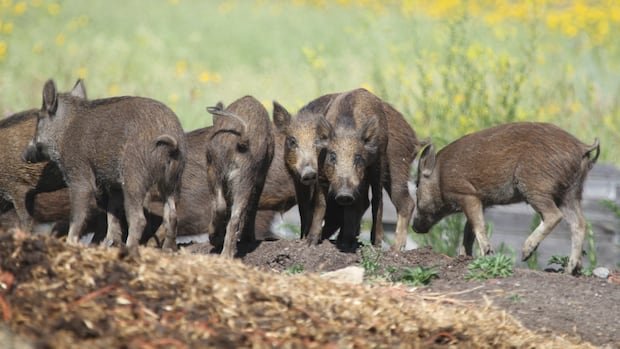
The Alberta government has recently classified wild boars as “a pest in all circumstances,” leading to the enforcement of new regulations regarding their captivity and hunting in the wilderness starting on December 1. Individuals in Alberta are now prohibited from keeping, purchasing, selling, acquiring, or transporting wild boars without a valid permit, effectively halting the establishment of new wild boar farms in the province.
Moreover, the hunting and trapping of wild boars in Alberta have been outlawed, except for landowners or occupants who are permitted to eliminate the animals on their own property. Those who eliminate a wild boar are now mandated to promptly report the date, location, and quantity of boars taken to the provincial authorities.
Hannah McKenzie, the specialist in wild boars for the province, emphasized that these alterations were implemented due to the threats posed by existing wild boar populations and the potential hazards associated with more boars escaping from captivity. She highlighted the severe risks wild boars present in terms of damaging agriculture, the environment, and the introduction and spread of foreign animal diseases like African swine fever and foot-and-mouth disease, which could greatly impact the pork industry, livestock industry, and trade relationships.
The term “wild boar” typically refers to the Eurasian wild pig or hybrids of that species with domestic swine. Originally introduced to the Prairies in the late 20th century for livestock purposes, some of these animals managed to establish feral populations across Canada, particularly in the Prairie provinces.
McKenzie mentioned that as wild boars expand and become a more significant threat, various provinces and jurisdictions have adjusted their wild boar management strategies to mitigate disease and trade risks. Currently, Alberta is collaborating with 12 wild boar farms in the province, offering them the choice to either maintain their boars under stricter conditions or receive compensation from the government to exit the industry. The province is providing $590 per boar along with compensation per linear foot for fencing, with an estimated program cost of approximately $2.6 million.
Charlotte Shipp, the programs manager for Alberta Pork industry, acknowledged the complexity of the situation, noting that wild boar producers are also contributors to Alberta Pork. Shipp expressed that the new regulations surrounding wild boar farming, particularly in preventing escapes and the potential spread of African swine fever, along with providing an exit incentive to producers, represent positive steps forward.
Wild boars’ elusive nature and destructive tendencies make them challenging to monitor accurately, as traditional survey methods like aerial surveys are ineffective due to their nocturnal habits and preference for densely forested habitats. Ryan Brook, a Professor at the University of Saskatchewan specializing in invasive wild boars in Canada, emphasized the urgent need for stricter regulations in managing wild boars, highlighting their environmental destruction and contamination of water sources with diseases in wetlands due to their lack of sweat glands.
Despite the ban on sport hunting, which Brook has advocated for over 15 years, there is no evidence that it has significantly reduced wild boar populations. This is partly due to their high reproductive rates, with an average of two litters of six piglets per year, making hunting ineffective in swiftly eradicating them. Brook emphasized that hunting not only fails to eliminate them rapidly but also disperses them across the landscape, as hunters rarely eradicate entire populations.

