
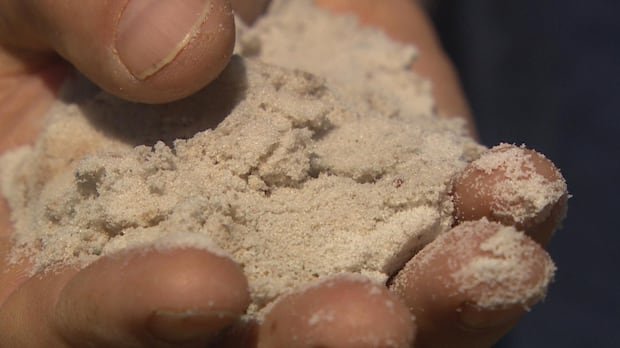
An Alberta firm looking to mine silica sand in Manitoba is collaborating with the largest university in the province on developing an innovative groundwater monitoring network. This partnership involves using cutting-edge technology that experts suggest is increasingly crucial for global groundwater research.
Carla Devlin, the president of Sio Silica, announced that the company will be teaming up with the University of Manitoba to conduct a feasibility study and create a technologically advanced, non-intrusive system capable of monitoring aquifer conditions in real-time. Devlin emphasized that the goal is not solely for their project but also to establish a valuable tool for responsible resource management across the province.
The collaboration comes as Sio Silica is pushing forward with its plans to extract sand from the sandstone aquifer beneath the Rural Municipality of Springfield in southeastern Manitoba. The company’s previous attempt to secure a license in 2024 was rejected by the NDP government due to concerns about potential impacts on water quality and underground collapses.
Initially, Sio Silica proposed drilling 7,200 wells in the eastern and southeastern regions of Winnipeg over a span of 25 years to extract silica sand for various industrial purposes. However, the proposal faced strong opposition from the community over environmental worries, particularly regarding the potential contamination of drinking water.
In response to the opposition, Sio Silica revised its plan, intending to drill fewer wells, proceed more gradually, and extract a reduced amount of sand in its renewed license application last year.
Devlin clarified that the partnership with the university is separate from the company’s license application but underscores a commitment to transparency and scientific rigor in their project. She expressed confidence that the research initiative will enhance understanding of the aquifer and contribute to informed decision-making based on scientific data and long-term environmental stewardship.
Describing the research project as a groundbreaking endeavor, Devlin highlighted the significance of studying the southern Manitoba aquifer comprehensively to generate a comprehensive groundwater database, which would otherwise require substantial government investment.
Ricardo Mantilla, an associate professor at the University of Manitoba, leading the project mentioned that they will utilize quantum gravimetry to measure changes in the gravitational field as groundwater migrates. This advanced technology can determine groundwater quantities but not water quality. Mantilla emphasized the importance of understanding water dynamics for both Sio Silica’s operations and the broader water management strategies in the province.
Landon Halloran, a hydrogeologist from the University of Neuchatel in Switzerland, noted that quantum gravimetry has been pivotal in developing new groundwater monitoring techniques worldwide. While the technology offers global-scale insights, it may not provide detailed information for localized issues.
Halloran suggested that gravimetry could potentially reduce the need for expensive groundwater monitoring wells, aligning with Sio Silica’s goal of drilling fewer wells. He stressed the importance of safeguarding groundwater resources, emphasizing their critical role in the water cycle and as a primary source of drinking water.

