
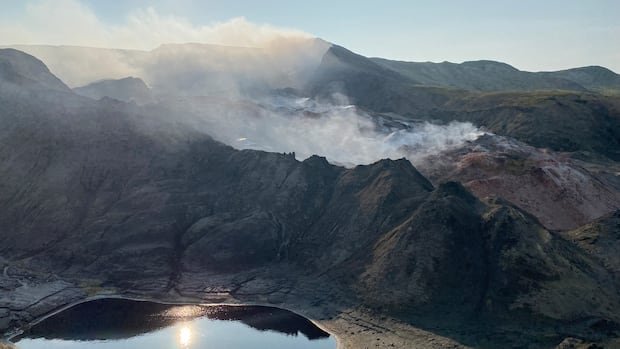
Calgary scientists have identified what they believe to be some of the most acidic natural water in the world in the Northwest Territories. The impact of climate change is evident as permafrost thawing and slumping processes from the Smoking Hills Formation are releasing toxic metals and highly acidic solutions into rivers, bays, and potentially the Arctic Ocean.
Research scientist Stephen Grasby from the Geological Survey of Canada visited the area on the territory’s north shore in 2017 and 2023, marveling at the significant levels of toxicity and acidity in the ponds surrounding the Smoking Hills. Grasby emphasized the remarkable power of nature, stating that the acidic waters found there surpass any industrial site’s capabilities in producing toxicity.
The unusual natural occurrence of extreme acidity is attributed to toxic metals trapped in iron sulfide minerals like pyrite, also known as “fool’s gold,” deposited underground around 85 million years ago during a period of volcanic activity in Arctic Canada. The exposure of pyrite to oxygen due to slumping has led to the release of high levels of metals into the water bodies near the Smoking Hills.
The landscape has undergone noticeable changes between Grasby’s visits, with ponds turning black, resembling oil rather than water, and exhibiting such high acidity that measuring the pH level accurately has been challenging. The temperature of the surrounding ground has also risen significantly, with evidence suggesting temperatures exceeding 1,200 degrees Celsius just below the surface layer.
The thawing of permafrost due to climate change is exacerbating the situation further. While permafrost thawing is not a new phenomenon, the resulting impacts on water quality are only starting to be studied, emphasizing the need for a deeper understanding to predict and manage water ecosystems in the North.
Concerns about the potential environmental effects and the leakage of metals into other water bodies persist among researchers like Grasby and Elliott Skierszkan from Carleton University. The impact of these toxic metals on river ecosystems downstream remains a significant worry, as even though the pH levels approach natural levels further downstream, they can still pose risks to aquatic life.
As more research is deemed necessary to comprehend the complex dynamics of the Smoking Hills and the influence of climate change on them, Grasby and Skierszkan hope that their findings will contribute to safeguarding the pristine Arctic environment and stimulate further investigation in the region.

