
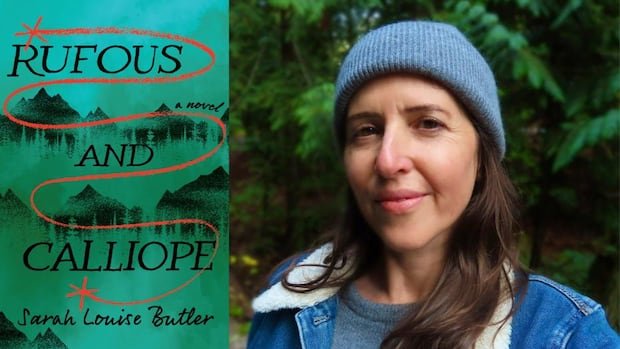
In his forties, Rufous, a contemporary mapmaker, is experiencing memory loss. Facing the challenges of his cognitive decline and navigating the rugged terrain of British Columbia’s Interior, he embarks on a solitary journey in search of the treehouse where he and his siblings once spent a summer. This sets the stage for Nelson, B.C., author Sarah Louise Butler’s most recent novel, “Rufous and Calliope,” a multifaceted narrative portraying Rufous as both a middle-aged man today and a child in the 1970s.
Butler’s inspiration to explore dementia in her writing stems from personal experiences with her grandmother, who resided in a nursing home near Butler’s childhood home. Recalling her time spent at the nursing home, Butler reflects on her concerns about potential memory loss and how Rufous’s story serves as a whimsical exploration of that fear.
In a conversation with CBC’s Margaret Gallagher, Butler discusses the novel and its themes, shedding light on her creative process and future endeavors. The book follows Rufous on a quest to locate the treehouse where he shared memories with his siblings. Butler explains that the treehouse symbolizes her childhood dream of living in such a space and emphasizes the significance of sibling relationships in the story.
Set in a fictional town within British Columbia’s Interior, the landscape serves as a key inspiration for the narrative. Drawing from her previous work, Butler maintains the fictionalized setting to create a cohesive backdrop for her characters. Despite similarities to the Kootenays region, Butler clarifies that the setting is a blend of reality and fiction to facilitate her storytelling process.
Butler’s narrative intertwines Rufous’s deep connection with nature and wildlife, reflecting her own experiences exploring the wilderness surrounding her town. The author’s encounters with wildlife, such as bears and moose, influenced the storytelling, with Rufous’s interactions with animals symbolizing a deeper connection to his surroundings.
The novel’s manipulation of time and perception posed a challenge for Butler during the writing process, requiring meticulous structuring and organization. Despite the complexity, Butler aimed to create a seamless and immersive experience for readers, akin to assembling a harmonious quilt of interconnected story elements.
Regarding the future of Rufous’s character, Butler hints at the possibility of revisiting him in her upcoming works, contemplating new perspectives and developments for the enigmatic protagonist. With overlapping characters across her books, Butler remains open to exploring Rufous’s journey from alternative viewpoints in future narratives.

