
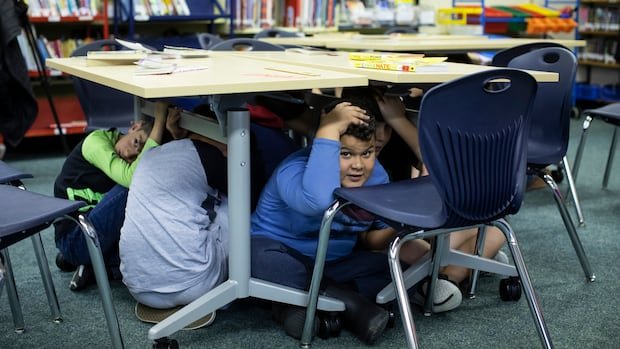
Minutes after a powerful 9.0 magnitude earthquake strikes near Vancouver Island on a summer day, a significant number of British Columbians are either deceased or injured amidst the chaos. Subsequently, a tsunami, aftershocks, and disorder ensue. Distressed survivors swarm hospitals in search of their loved ones, while infrastructure like roads and rail links suffer damage from the quake and are further inundated by the tsunami. This dire “megathrust” earthquake scenario is outlined in a B.C. government risk analysis, projecting over 3,400 fatalities and 10,000 injuries on the day of the primary quake.
The analysis also forecasts staggering costs of $128 billion, the obliteration of 18,000 structures, and substantial harm to 10,000 more buildings. Economic growth is predicted to be halved with job losses and a decrease in GDP extending over the following decade. The report emphasizes that these losses would surpass the cumulative impacts of all disasters faced by British Columbia over the past two centuries.
The most severe damages are anticipated to be concentrated on Vancouver Island and a roughly 20-kilometer stretch along coastal areas of the lower mainland encompassing Vancouver, extending from the U.S. border to the Sunshine Coast. This risk assessment is part of the broader B.C. disaster and climate risk evaluation, dated October 2025, which also outlines various other extreme event scenarios such as severe flooding in the Fraser Valley, high-tide flooding on the southwest coast post a winter storm, urban interface fires, and prolonged droughts.
Edwin Nissen, a professor of earth and ocean sciences at the University of Victoria, mentioned that the report’s estimations of fatalities and destroyed structures are based on simulations. He emphasized the significance of factors like the structural integrity of buildings in different locations, materials used, and adherence to building codes in determining the impact of the earthquake. Nissen highlighted the uncertainty surrounding these figures due to variables like the time of day and year when the quake occurs.
According to Nissen, historical records from First Nations and modern studies of the Cascadia fault, which stretches from mid-to-northern Vancouver through the Pacific to Northern California, provide insights into past seismic events in the region. The report indicates a 2 to 10 percent probability of a similar extreme event occurring within the next 30 years. It draws parallels with the 9.1-magnitude Indian Ocean earthquake in 2004 in terms of tectonic settings, rupture length, and tsunami generation.
While the last earthquake of such magnitude in the region dates back more than three centuries, Nissen cautioned that these events do not follow a regular pattern and can occur with varying intervals. He stressed the importance of ongoing preparedness for such disasters given the unpredictable nature of seismic activities. Nissen also pointed out the limited understanding of the Cascadia subduction zone due to the scarcity of moderate earthquakes recorded in the area.
In conclusion, the report underscores the necessity for continuous monitoring and preparedness efforts to mitigate the potential impact of catastrophic seismic events.

