
Afghanistan reported on Sunday that it had eliminated 58 Pakistani soldiers during border operations conducted overnight in response to what it perceived as repeated violations of its airspace and territory. Earlier in the week, Afghan authorities accused Pakistan of carrying out bombings in Kabul and an eastern market, although Pakistan did not acknowledge responsibility for the attacks.
Zabihullah Mujahid, the chief spokesperson for the Taliban government, stated that Afghan forces had seized 25 Pakistani army posts, resulting in the deaths of 58 soldiers and injuries to 30 others. Mujahid emphasized during a news conference in Kabul that Afghan control over official borders and de facto lines had been maintained, with efforts to curb illegal activities. Pakistan had not confirmed any casualties at the time.
Incursions into Afghanistan by Pakistan have previously targeted alleged militant hideouts in remote, mountainous areas. The recent escalation, highlighted by intense clashes on Saturday night, underscores the escalating tensions between the two nations. The Afghan Taliban’s Defence Ministry asserted on Sunday morning that retaliatory operations had been carried out successfully along the border, with a warning of a robust response if Afghanistan’s territorial integrity is violated again.
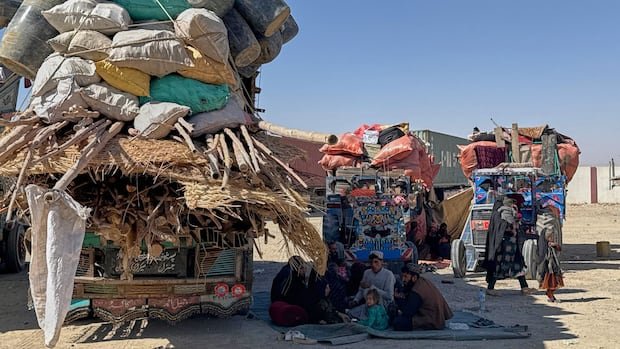
The Torkham border crossing, a crucial trade route between Afghanistan and Pakistan, did not open at the expected time on Sunday, causing disruptions to cross-border movements. Additionally, the Chaman crossing in southwest Pakistan remained closed, affecting individuals, including Afghan refugees departing from Pakistan, due to heightened security concerns.
Regional powers have called for restraint following the border clashes. Pakistan has accused Afghan authorities of sheltering members of the banned group Tehreek-i-Taliban Pakistan, alleging their involvement in deadly attacks within Pakistan. Meanwhile, Pakistan accuses India of supporting armed groups without substantiating its claims.
The recent border skirmishes could intensify regional instability, considering the historical tensions between India and Pakistan, which have previously neared conflict over incidents in the disputed region of Kashmir. India has also strengthened its ties with the Taliban government in Afghanistan, culminating in the elevation of its technical mission in Kabul to a full-fledged embassy.
Saudi Arabia has urged calm to de-escalate tensions and maintain regional security and stability. The country recently entered into a mutual defense agreement with Pakistan, further highlighting the complex geopolitical dynamics in the region.
Before the Afghan reports of casualties, Pakistani Prime Minister Shehbaz Sharif condemned the assault and praised the army’s response, claiming to have destroyed several Afghan posts. Pakistani security officials shared videos purportedly depicting the destruction of Afghan checkpoints, although independent verification was not possible due to restricted media access to these areas.
According to Pakistani security sources, Afghan forces initiated firing in various northwestern border areas in the province of Khyber Pakhtunkhwa. Pakistani authorities asserted control over 19 Afghan border posts allegedly used for launching attacks, with reports of Taliban personnel either being eliminated or fleeing. The countries share an extensive border called the Durand Line, which Afghanistan has never formally recognized.

