
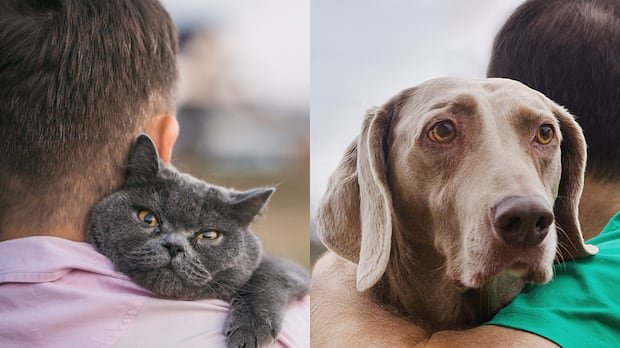
A recent study by the Canadian Animal Health Institute (CAHI) revealed that Canada boasts one of the highest rates of pet ownership globally, with over 12 million households owning at least one cat or dog in 2024. Cats and dogs are the most favored pets, with populations of 8.9 million and 8.3 million, respectively. Additionally, Canadians also keep millions of birds, fish, and reptiles as animal companions.
Owning a pet has been shown to have significant positive effects on people’s health and well-being. Jay Ingram, the author of “The Science of Pets,” believes that the benefits of pet ownership go beyond health impacts and tap into humans’ innate connection with the natural world. The reasons why humans keep pets remain a topic of debate, with evolutionary biologist Edward O. Wilson’s “biophilia” hypothesis suggesting that humans have a natural affinity for other living beings, connecting us to all forms of life.
The desire to form stronger bonds between humans and animals has led to advancements in animal cloning and the study of animal communication patterns. Notable figures like Paris Hilton and Tom Brady have cloned their pets, indicating a growing trend in pet cloning. However, misconceptions about cloning often lead to unrealistic expectations of identical replicas, as genetic influences and environmental factors play significant roles in shaping an animal’s traits.
While cloning technology has advanced since the 1960s, with applications in various fields such as agriculture, the primary focus has shifted towards economic interests rather than scientific exploration. The scientific community remains intrigued by the concept of animal sentience and understanding the cognitive processes of pets like dogs and cats. However, significant progress in this area is impeded by the subjective interpretations and emotional biases of pet owners, hindering a comprehensive understanding of animal behavior.
Research efforts in studying wild animals have shown promising results, as scientists can observe and analyze behaviors without the influence of human perceptions. Breakthroughs in deciphering communication patterns among wild species, such as prairie dogs’ distinct calls for different animals and colors, highlight the potential for gaining insights into animal cognition. Despite ongoing strides in animal behavior research, the fundamental differences in thought processes between humans and animals pose a challenge to fully comprehending the depths of animal minds.

