
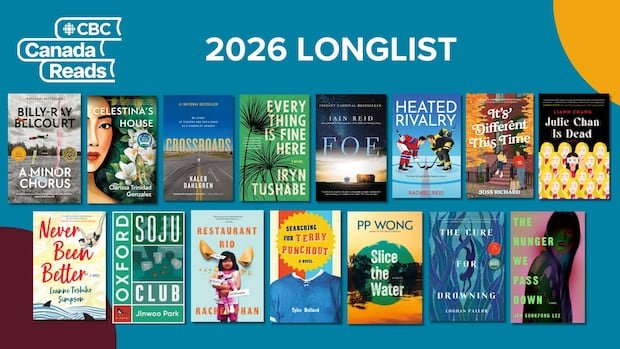
Canada Reads, the annual Canadian book debate, has returned for 2026 with a focus on stories that build connections among people. The longlist for this year includes a diverse collection of titles showcasing the power of storytelling to inspire and unite individuals.
On Canada Reads, five Canadian celebrities select one book each for all Canadians to read. Over four days, they passionately debate their choices, eliminating one book daily until the last book standing is declared the winner. The highly anticipated event will be broadcasted on April 13-16 across various platforms including CBC TV, CBC Radio, CBC Listen, CBC Gem, and CBC Books, as well as on YouTube and as a podcast.
Each year, CBC Books unveils a longlist before announcing the final contenders. The 2026 longlist encompasses a wide range of genres from hockey romance and memoir to historical fiction and horror, highlighting the richness of Canadian literature.
The 2026 longlist features renowned authors such as Billy-Ray Belcourt with “A Minor Chorus,” Clarissa Trinidad Gonzalez with “Celestina’s House,” and Kaleb Dahlgren with “Crossroads.” Additionally, titles like “Everything Is Fine Here” by Iryn Tushabe and “Foe” by Iain Reid promise gripping narratives that captivate readers.
The upcoming Canada Reads will mark its 25th edition in 2026, continuing its legacy of celebrating Canadian literary talent. Since its inception in 2002, Canada Reads has honored remarkable works, with past winners including “In the Skin of a Lion” by Michael Ondaatje and “A Two-Spirit Journey” by Ma-Nee Chacaby.
The 2026 longlist also highlights authors who have previously been recognized, such as Loghan Paylor and Iryn Tushabe, who were longlisted for the CBC Nonfiction Prize. For those interested in nonfiction writing, the CBC Nonfiction Prize is currently accepting submissions until March 1, offering writers the opportunity to win prestigious awards and have their work published on CBC Books.
Readers can explore the 15 books on the Canada Reads 2026 longlist, each offering a unique and engaging literary experience. For those preferring accessible formats, organizations like The Centre for Equitable Library Access (CELA) and National Network for Equitable Library Service (NNELS) provide books in audio, braille, and text formats, ensuring inclusivity in literature consumption.

