
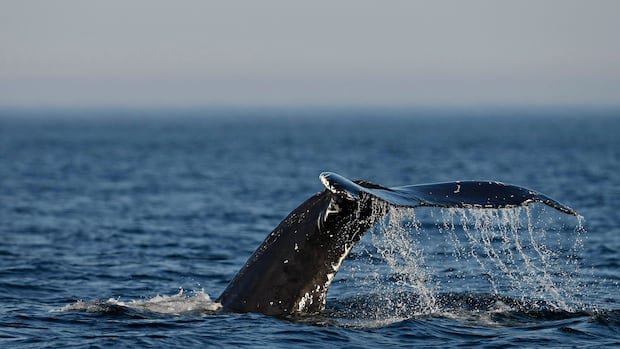
A recent Canadian study indicates that as the Gulf of St. Lawrence warms up, the dietary habits of certain baleen whales are changing due to shifts in available prey. Lead researcher Charlotte Tessier-Larivière from Université du Québec à Rimouski highlighted a decline in Arctic krill, a key food source for fin whales in the past. The study reveals that fin and minke whales are now consuming more forage fish like capelin, mackerel, and herring, similar to the diet of humpback whales in the region.
The findings suggest that whale species can adapt their diets based on the availability of preferred prey, although the full extent of their adaptive capabilities remains uncertain. Concerns arise about potential competition for food resources among these whales if the prey species diminish in numbers.
According to Hanna Vatcher from the Oceana advocacy group, while it is positive that whales seem to be adjusting, the study also underscores the impact of climate change on marine ecosystems. The changing ocean conditions are affecting a range of species, from large whales to smaller forage fish, reflecting the dynamic nature of marine environments.
The study involved analyzing tissue samples from different whale species and their prey over 28 years, using carbon and nitrogen isotopes as indicators of dietary patterns. The results showed an increase in forage fish consumption by all three whale species in recent years, highlighting the significance of these fish in the marine food chain.
Despite similarities in their food sources, the study observed a concept known as “resource partitioning” among fin, minke, and humpback whales. This behavior suggests that the whales are diversifying their prey choices to reduce competition in response to limited food availability.
Janie Wray, CEO of BC Whales and North Coast Cetacean Society, emphasized the intelligence of whales in adapting to varying conditions. She mentioned the cooperative feeding behaviors observed, such as bubble net feeding by humpback whales, and the potential for different whale species to target distinct fish species in shared feeding grounds.
Wray stressed the importance of understanding whale behaviors to identify and protect critical marine habitats. By recognizing areas frequented by whales as valuable, conservation efforts can be targeted effectively to safeguard these essential ecosystems.
The study’s focus on the St. Lawrence region underscores the need for adaptive management strategies to protect marine habitats, considering the evolving habits of whales in response to climate shifts. Plans to expand existing protected areas reflect the ongoing efforts to preserve marine biodiversity in the face of environmental changes.

