
Weeks after the Canadian government announced the allowance of a limited number of Chinese-manufactured vehicles in the Canadian market, concerns have been raised about potential data privacy risks. However, some consumers seem unfazed by these concerns when considering purchasing a new car.
During their visit to the Canadian International AutoShow, Dianne Dougall and Pat Shephard, who were looking for an electric vehicle (EV) to replace their Tesla, expressed interest in Chinese-made EVs. They stated that privacy concerns were not a significant deterrent, as data storage across various countries already poses similar risks.
Debbie Perriccioli from Waterdown, Ont., who is nearing the end of her vehicle lease, also showed interest in Chinese-made vehicles at the auto show. She emphasized that privacy concerns are becoming obsolete and would not deter her from considering a Chinese-manufactured vehicle.
Recent data from a survey conducted by Leger between Jan. 30 and Feb. 2 showed that 61% of Canadians support the introduction of Chinese EVs in the Canadian market. Concerns about vehicle quality and impacts on the Canadian auto industry were highlighted by a higher percentage of respondents (38%) compared to those concerned about privacy and security (33%).
Experts interviewed by CBC News acknowledged that data security is a critical issue for modern connected vehicles, irrespective of their country of origin. They pointed out that Canada’s existing privacy laws might not be robust enough to safeguard consumers against potential data access by the manufacturing country, including China.
David Masson, the Vice President and Field Chief Information Security Officer at Darktrace, emphasized that all vehicles now function essentially as “computers on wheels.” He highlighted that China’s laws requiring cooperation with the government raise concerns about data security, similar to the Cloud Act in the U.S.
Critics like Pierre Poilievre and Doug Ford have voiced concerns about the deal with China, labeling Chinese EVs as potential “surveillance systems” and “spy cars.” Brian Kingston, CEO of the Canadian Vehicle Manufacturers’ Association, also criticized the decision, citing trade irritants and security issues associated with Chinese autos.
Despite initial privacy concerns, Ottawa now mandates that Chinese vehicles meet Canadian security standards before being sold in the country. However, experts like Beth-Anne Schuelke-Leech have highlighted the lack of a robust system for ensuring data security and protecting consumer privacy in connected vehicles.
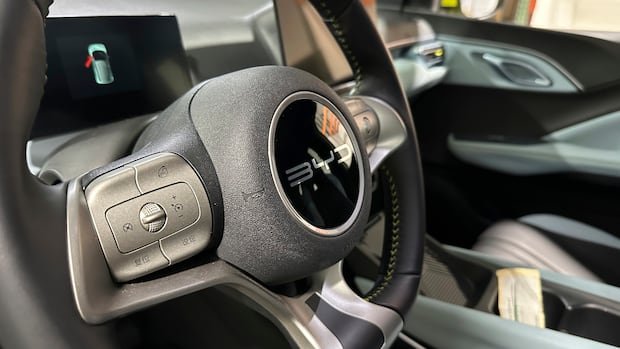
Currently, BYD seems to be the only major Chinese automaker formally registered to import passenger cars into Canada, as per Transport Canada records. The entry of Chinese-made vehicles has raised concerns similar to those surrounding other Chinese companies like Huawei and TikTok in terms of national security implications.
National security analyst Stephanie Carvin emphasized that allowing Chinese vehicles into Canada may not pose new data security risks, as concerns about Chinese surveillance capabilities already exist. The focus is more on economic national security and the competitive advantages Chinese automakers may have due to state support.
In conclusion, while the entry of Chinese-made vehicles into the Canadian market raises valid concerns about data security and national security, consumers and experts alike are divided on the potential risks and benefits associated with this development.

