
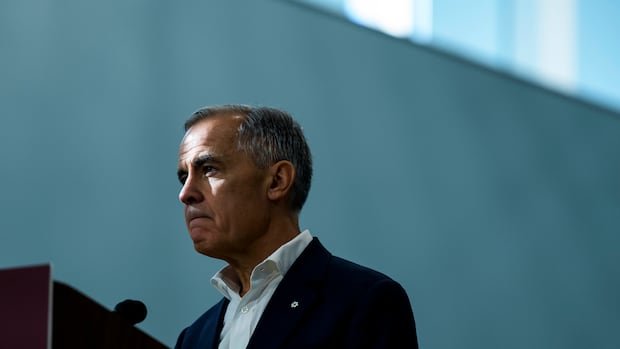
Prime Minister Mark Carney stated on Thursday that his government is currently not contemplating imposing additional retaliatory tariffs on American goods amidst the ongoing trade dispute. This decision comes as bilateral discussions on relief measures show promising progress. Pressure from various premiers, including Ontario’s Doug Ford, and labor groups has urged Carney to take a firmer stance against U.S. President Donald Trump’s escalating tariffs, which have diverted jobs and investments away from Canada.
Carney’s remarks followed Stellantis’ recent announcement to shift production of its Jeep Compass from its Brampton, Ontario plant to Illinois. This move, attributed to U.S. trade actions, was described by the prime minister as a direct consequence of the current trade environment. Ford, ahead of his meeting with Carney, emphasized the need to retaliate strongly if a deal cannot be reached with the U.S., advocating for a tougher approach.
Despite these calls for action, Carney emphasized the importance of ongoing negotiations between Canadian and U.S. officials. He underscored the significance of dialogue at this juncture, as both nations are deeply engaged in intense talks. Canada’s Trade Minister Dominic LeBlanc and Michael Sabia, the Privy Council clerk, are in Washington to collaborate with senior U.S. officials towards a resolution.
Carney highlighted that discussions have focused on key sectors such as steel, aluminum, and energy, with considerations for potentially reviving the Keystone XL pipeline. U.S. Commerce Secretary Howard Lutnick’s statements ruling out the removal of tariffs on Canadian automobiles have fueled concerns in Ontario, prompting Ford’s calls for a tougher stance against the U.S.
In previous months, Carney lifted most of the retaliatory tariffs imposed by former Prime Minister Justin Trudeau in a bid to facilitate negotiations with the U.S. The Section 232 tariffs on various goods remain in effect, although many other Canadian products continue to enter the U.S. duty-free. Carney has maintained tariffs on specific U.S. imports as part of efforts to secure a favorable trade agreement.
Regarding the impact on the Brampton plant, Carney expressed disappointment over Stellantis’ decision and engaged with the company’s CEO to address the situation. The potential replacement for the Compass model at the Brampton facility hinges on the outcome of the upcoming Canada-U.S.-Mexico Agreement renegotiation. Carney assured support for affected autoworkers, suggesting opportunities for relocation to the Windsor plant.
Unifor, representing Stellantis autoworkers, expressed reservations about the proposed transfers, deeming them insufficient to offset the loss of jobs in Brampton. Conservative Leader Pierre Poilievre criticized Carney for the plant closure, attributing it to broken promises and urging policy changes to bolster domestic auto manufacturing.
Poilievre advocated for dropping the forthcoming electric vehicle mandate and proposed eliminating the GST on Canadian-made vehicles to stimulate local auto production. Despite these challenges, Carney has paused the EV mandate following concerns raised by automakers about the feasibility of the previous government’s sales targets.

