
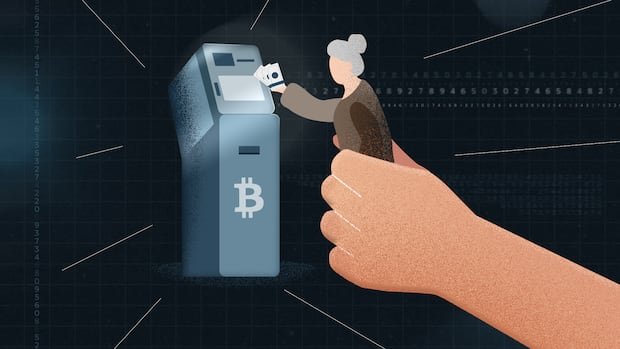
Brenda Smith was unfamiliar with cryptocurrency ATMs until she fell victim to a sophisticated cyber scheme that led her to deposit over $12,000 in cash into two machines last year. The 76-year-old retiree from Calgary had suffered a stroke a few months prior, impairing her cognitive abilities.
Smith shared, “They’re so convincing, and unfortunately I was vulnerable. He guided me through the process, and I deposited the money without much thought.” These crypto ATMs resemble traditional bank machines but instead of dispensing cash, they allow users to deposit cash and convert it into cryptocurrencies like Bitcoin, which can then be sent to virtual wallets globally.
After the incident, Smith was left clueless about the whereabouts of her money. She expressed the impact of the loss, stating, “It was devastating, even though it was only $12,000. For a senior on a pension, that’s a significant amount.”
The first crypto ATM was introduced in a small Vancouver coffee shop in 2013, marked as an innovative solution for quick crypto purchases. Presently, Canada hosts around 3,600 crypto ATMs, with over 39,000 worldwide, raising concerns among authorities regarding their misuse.
A thorough investigation by CBC News discovered that these legally-operating machines are extensively utilized by fraudsters to extract funds from victims across Canada. Financial intelligence agency FINTRAC highlighted the prominent role of Bitcoin Automated Teller Machines in facilitating criminal activities and money laundering within the cryptocurrency ecosystem.
Despite these findings, FINTRAC does not actively monitor the companies operating these machines or their locations across Canada. Crypto ATM operators fall under the classification of “money services business,” obliging them to adhere to anti-money laundering laws, report large cash transactions, and follow Know Your Customer rules for transactions exceeding $1,000.
Major law enforcement agencies like the RCMP and Toronto police do not track the extent of fraud involving crypto ATMs. The Canadian Anti-Fraud Centre reported victims losing $14.2 million to crypto ATM scams in 2024, and this figure is expected to surpass this year. However, these statistics are limited, with only a small percentage of fraud incidents being reported.
Toronto police detective David Coffey emphasized the daily influx of fraud reports related to crypto ATMs, underscoring the challenges in investigating such cases. Crypto ATMs have become a preferred tool for fraudsters due to their convenience and rapid transaction processing.
Canada currently boasts the highest number of crypto ATMs per capita globally, with nearly 91 machines per one million residents. TRM Labs revealed that Canadian crypto ATMs processed nearly $1.5 billion from the start of the year until mid-August, with a portion linked to illicit activities.
Experts attribute the attractiveness of crypto ATMs to their accessibility, speed, and minimal authentication requirements for transactions. However, these factors also make them susceptible to misuse by scammers, preying on vulnerable individuals who may not fully comprehend cryptocurrency transactions.
In the case of Brenda Smith, the realization of being defrauded only occurred after discussing the incident with her daughter, highlighting the devastating impact of falling victim to such schemes.

