
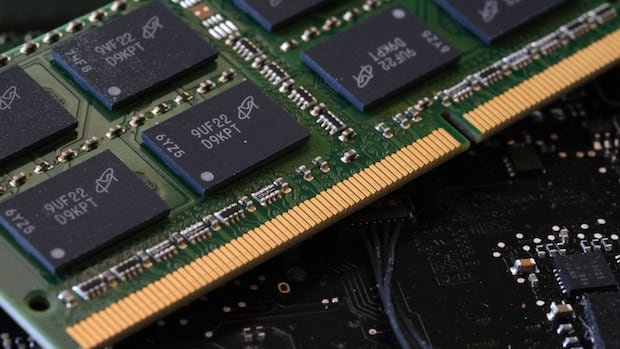
The surge in investment in artificial intelligence has caused a global shortage of memory chips, posing a significant challenge for consumer electronics companies worldwide. The scarcity of random access memory (RAM), a crucial component in modern devices, is expected to result in price hikes and shipment delays for laptops, smartphones, gaming consoles, and vehicles.
According to Willy Shih, a management practice professor at Harvard Business School, the increased investments in AI data centers have created a high demand for memory chips, impacting the supply chain. The world’s RAM supply is predominantly manufactured by three companies: South Korea’s Samsung and SK Hynix, along with the U.S.-based Micron Technology. Micron and SK Hynix have already sold out of high bandwidth memory chips for the remainder of the year.
These companies have shifted their focus from traditional DRAM and flash memory production to high-bandwidth memory used in AI applications, resulting in a shortage in the consumer electronics market. Efforts are being made to expand production capacity, but it will take time to address the imbalance in supply and demand.
Major tech companies are bracing for the impact of the memory chip shortage, with some already experiencing challenges. Qualcomm’s weak second-quarter forecast was attributed to the scarcity of memory chips, while Intel’s CEO warned that relief from the shortage may not be imminent. Companies like HP and Dell have started raising prices on their products due to the supply chain constraints.
Apple’s CEO, Tim Cook, anticipates a significant increase in memory pricing and is exploring various options to manage the situation. The shortage is also affecting smaller players like Framework, a repairable computer manufacturer, which is absorbing the higher costs to maintain prices for consumers.
In the gaming industry, concerns are rising about potential delays in console releases and price hikes due to the memory chip shortage. Video game companies are strategizing to offset rising costs by implementing additional fees and expanding their revenue streams. Sony, for instance, plans to focus on monetizing its existing customer base to mitigate the impact of higher memory costs.
The memory shortage is expected to persist until the end of the year, with repercussions for the industry if the supply-demand dynamics are not addressed. Companies may need to reevaluate their production strategies if the demand for AI investments declines, potentially leading to another memory crisis in the future.

