
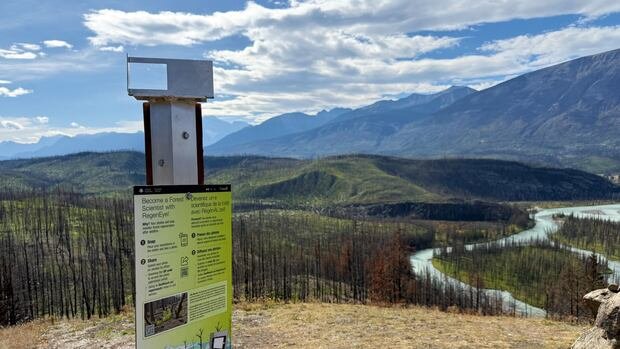
Visitors at Old Fort Point witnessing the aftermath of the Jasper wildfire are greeted with a transformed landscape compared to the pre-2024 scenery. The desolate view now mirrors photographs from the early 1900s, showcasing a stark resemblance. As nature begins to rejuvenate following the massive fire, hikers on the well-trodden trail have the chance to engage in a citizen science initiative to record the area’s recovery.
Collaborating with the University of Waterloo, Parks Canada has initiated a project to collect photographs from three designated spots on the trail. These locations capture distinct perspectives, including a north-facing summit view, a south-facing panoramic vista, and a detailed shot of the vegetation on the trail’s backside. Utilizing GeoReach, a University of Waterloo program that employs standardized image data for monitoring landscape changes nationwide, the project aims to track the post-wildfire regrowth in Jasper.
The concept of repeat photography, a technique employed by researchers to observe landscape evolution by replicating specific elements of an original image, is central to this endeavor. Over the summer, Parks Canada installed three cellphone stands along the 3.8-kilometre trail, providing visitors with the opportunity to capture images. Participants can upload their photos directly by scanning QR codes at the stations or visit the GeoReach website to contribute, allowing researchers, citizen science groups, and the public access to the shared images.
This season has seen promising signs of new life emerging in the area, with vibrant grasses sprouting amidst the charred remnants and wildlife returning to the landscape. Gedling noted the appearance of purple fleabane and yellow arnica as the initial plant species to reappear post-wildfire. Additionally, fireweed, known as a symbol of forest regeneration after fires, has begun to show growth, indicating a promising ecological recovery process.
Certain sections of the trail still bear aspen trees that may seem unaffected externally but have suffered internal damage due to the intense heat of the wildfire. Gedling highlighted the presence of aspen suckers, new growth emerging from existing root systems without the need for seeds. The regrowth of fresh grass post-fire serves as a nutritious food source for wildlife, facilitating a quicker recovery for the ecosystem.
The landscape now resembles a grassland ecosystem, characterized by deciduous trees rather than the previously prevalent coniferous forest. Gedling emphasized that despite the challenges posed by wildfires, they are a natural part of the forest’s life cycle, essential for maintaining a healthy ecosystem. While acknowledging the hardships faced by those impacted by the Jasper wildfire, Gedling emphasized the importance of such natural processes for the long-term well-being of the environment.

