
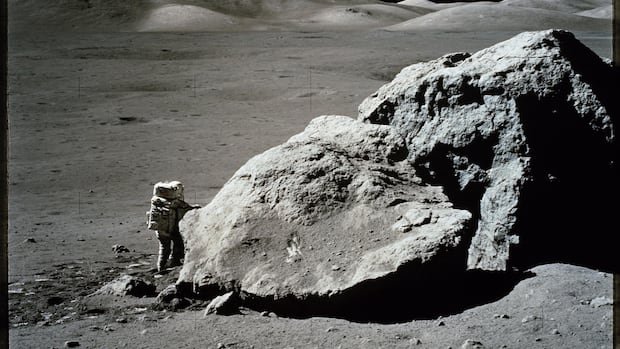
On July 20, 1969, the global audience held its breath as two American astronauts, Neil Armstrong and Buzz Aldrin, made their way across the moon’s surface while Michael Collins observed from above. This event was intended to mark the dawn of the space age, envisioning humans breaking free from Earth’s confines and venturing into space.
Despite subsequent missions, including the incident-ridden Apollo 13, the era of lunar exploration concluded following Apollo 17 in December 1972. Various factors contributed to this, such as the costly Vietnam War, achieving the goal of beating the Soviet Union to the moon, and declining public interest.
After a hiatus of 53 years, NASA’s ambitious Artemis program aims to revive human lunar missions within the next few years. But why the moon again? What benefits could it bring to humanity?
According to Philip Stooke, a professor at Western University, the purpose of human space flight is scientific exploration and engineering advancement. The upcoming Artemis II mission, scheduled for early February, will not land on the moon but will orbit it, allowing astronauts to conduct experiments and test crucial hardware.
Artemis III, planned for 2028, will witness astronauts returning to the lunar surface, particularly the unexplored south pole. This mission aligns with a global trend, as countries like China and India also have lunar exploration goals.
The moon presents a valuable opportunity for scientific discoveries and technological advancements that can have practical applications on Earth. For instance, space missions have led to innovations in computer technology, food safety, and medical research. Additionally, the burgeoning space economy is driving investments in lunar exploration, with companies exploring the potential for resource extraction and creating new job opportunities.
While some may question the cost and priorities of lunar missions, proponents view them as investments that could yield long-term benefits for both humanity and the economy. As space exploration continues to evolve, the impact of lunar missions on society and technological innovation remains to be seen.

