
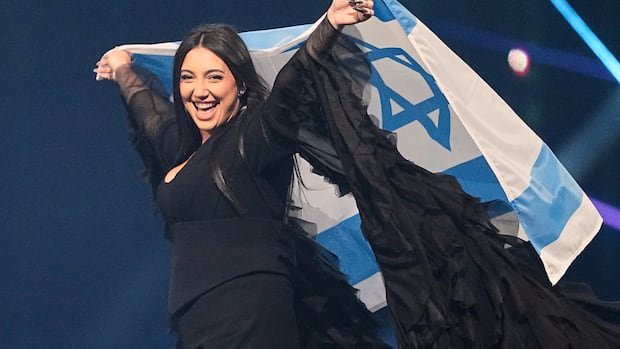
Public broadcasters from multiple countries, including Spain and the Netherlands, have decided to withdraw from the upcoming Eurovision Song Contest due to the inclusion of Israel as a participant. This move highlights the shift of focus from music and harmony to political discord within the event.
The withdrawals by Spain, the Netherlands, Ireland, and Slovenia followed discussions at a meeting of the European Broadcasting Union (EBU), which consists of public broadcasters from 56 countries overseeing the competition. Concerns were raised regarding Israel’s involvement, particularly in light of its actions during the Gaza conflict.
Although the EBU members voted for stricter voting regulations in response to allegations of vote manipulation by Israel, no measures were taken to exclude any broadcaster from the contest. This decision comes as the popular music event, watched by over 100 million viewers annually, grapples with the impacts of the Gaza conflict for the past couple of years.
In response to the situation, RTVE in Spain, Avrotros in the Netherlands, RTE in Ireland, and RTVSLO in Slovenia have publicly announced their non-participation. The final list of participating countries for the event in Vienna next May will be disclosed before Christmas.
Israeli President Isaac Herzog expressed satisfaction at Israel’s reinstated participation and emphasized the cultural and unifying aspects of the competition. In contrast, Avrotros and RTVE raised concerns over Israel’s participation, citing responsibilities as public broadcasters and humanitarian considerations regarding the Gaza crisis.
The upcoming Eurovision contest in Vienna faces division over political matters, with past events also being influenced by global issues. Notably, Russia was expelled in 2022 due to its actions in Ukraine. The conflict in Gaza has proven to be a significant challenge for the competition, with protests against Israel’s involvement at previous editions.
Critics of Israel’s participation have condemned its conduct during the Gaza conflict, which resulted in a high number of casualties. The conflict, which began in 2023, has been a point of contention, with differing views on the justification and handling of the situation.
The decision by some European broadcasters to boycott the event could impact viewership and financial aspects, especially amid financial constraints and the changing media landscape. Notably, Spain and Ireland, with their strong Eurovision histories, withdrawing from the competition adds further complexity to the situation.
The controversy surrounding Israel’s participation in the 2026 Eurovision Song Contest has the potential to overshadow the return of countries like Bulgaria, Moldova, and Romania, who are making a comeback after previous absences due to financial and artistic reasons.

