
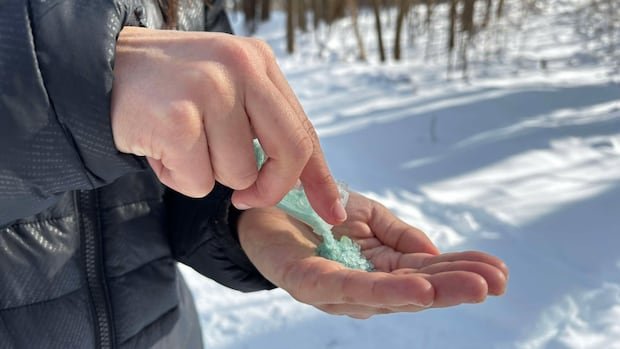
Amid a persistent cold snap in southwestern Ontario and a concurrent road salt shortage in municipalities, there is a growing emphasis on exploring alternative methods to thaw road ice. Researchers at Western University have been conducting a study since 2022 to investigate this issue, with plans to unveil the study findings later this year.
The study is evaluating nine different substances to assess their effectiveness in melting road ice across various conditions. Christopher Power, an associate professor involved in the research, highlighted that the prevalent use of sodium chloride (commonly known as rock salt) by Ontario municipalities is primarily driven by its cost-effectiveness due to its widespread availability.
While rock salt proves to be a successful ice-clearing agent by lowering water’s freezing point to melt existing ice and impede new ice formation, it has well-documented drawbacks. Its corrosive nature can accelerate the deterioration of metal components near or on roads, such as bridges and vehicles. Moreover, the environmental impact of salt runoff into water bodies, including the Great Lakes, poses a significant concern, leading to salinization that threatens freshwater ecosystems.
The study at Western University involved testing various de-icing substances on designated areas of the campus to analyze their efficacy and corrosiveness. Although the research phase has concluded, the team is currently analyzing the data collected to determine the melting efficiency and corrosive levels of each substance.
Despite the absence of a definitive superior alternative to sodium chloride, Power emphasized that economic considerations will influence the widespread adoption of any substitute. However, he suggested that less corrosive alternatives could complement rock salt, particularly in sensitive areas like bridges or water bodies, showcasing a more targeted approach to salt application that several municipalities are beginning to adopt.
In response to the current road salt shortage, the City of London is diversifying its road-clearing strategies by incorporating different substances into the mix. Joel Gillard, London’s division manager of road operations, mentioned plans to increase plowing frequency while reducing salt usage, especially during severe freezing conditions, transitioning to a sand-salt mixture for more effective ice and snow removal.

