
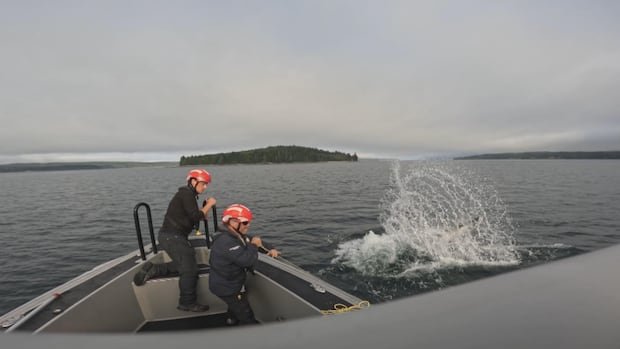
Humpback whales face an increased risk of getting tangled in fishing gear during periods of rising ocean temperatures when their cold-water habitats diminish, as indicated by recent findings. This study, conducted along the U.S. West Coast by the National Oceanic and Atmospheric Administration and documented in the peer-reviewed journal PLOS Climate, highlights the significance of shrinking cold-water environments in driving entanglement risks for humpbacks, surpassing the influence of rising humpback populations.
The cold-water habitat plays a vital role for species like humpback whales by fostering abundant marine life, including krill and small fish crucial for their diet. However, this beneficial cold water originating from deep ocean layers can be displaced or compacted by marine heatwaves associated with climate change, resulting in limited feeding areas, a phenomenon known as habitat compression.
When these restricted feeding zones overlap with fishing grounds, it creates a scenario where the interaction between whales and fishing gear intensifies, leading to a higher likelihood of entanglements. This intersection poses a significant threat to humpbacks, as emphasized by Andrew Trites, director of the Marine Mammal Research Unit at the University of British Columbia, who highlighted the dire consequences of entanglements for these marine mammals.
Analysis conducted by NOAA scientist Jarrod Santora and team over a 25-year period revealed a correlation between reported humpback entanglements, cold-water habitat changes, and population size off the West Coast. The study emphasized that entanglements were more prevalent in years with reduced cold-water habitat areas, indicating that population growth alone could not explain the surge in entanglement incidents.
To address this issue, the researchers developed a predictive tool called the Habitat Compression Index, capable of forecasting ocean conditions up to a year in advance. This index serves as a valuable resource for preemptively identifying high-risk entanglement periods and locations, enabling authorities to implement fisheries closures during these critical times and areas. Moreover, advancements in technology, such as ropeless fishing gear, offer promising solutions to mitigate entanglement risks for humpback whales moving forward.
In summary, the research underscores the detrimental impact of shrinking cold-water habitats on humpback whales and emphasizes the importance of proactive measures, including predictive tools and innovative fishing gear, to safeguard these majestic marine creatures from the perils of entanglements.

