
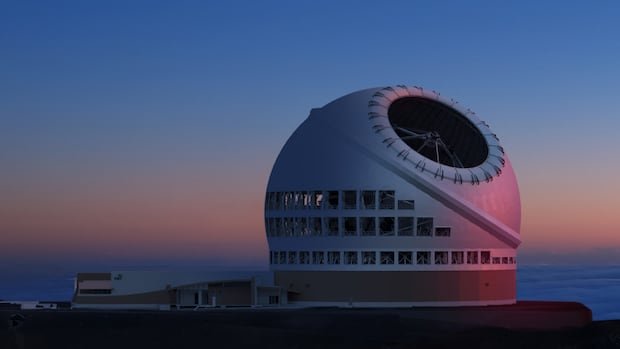
A new opportunity has emerged for the long-awaited construction of the largest telescope in the Northern Hemisphere, originally planned for Mauna Kea in Hawaii. Spain has stepped in with fresh funding and a new proposed site on the island of La Palma.
The international Thirty Meter Telescope (TMT) was initially slated to be located on Mauna Kea, a sacred site for Hawaiian Indigenous communities. Due to environmental and cultural concerns, the project faced significant delays and cost overruns.
Spain has offered €400 million (approximately $648 million) to support the construction of the TMT on Roque de los Muchachos in La Palma, part of the Canary Islands. While the new location is not as high or clear as Mauna Kea, it presents a viable alternative.
Despite Spain’s offer, environmental group Ben Magec-Ecologists in Action in the Canary Islands has expressed opposition to the project’s relocation. The outcome hinges on whether the TMT organizers have learned from past mistakes regarding community engagement.
In the realm of telescopes, size is crucial for capturing more light and observing distant celestial objects. The TMT, one of three “megatelescopes” in development, is unique in the Northern Hemisphere. The Extremely Large Telescope (ELT) and the Giant Magellan Telescope (GMT) are set to be based in Chile.
Planning for the TMT began over two decades ago, with various countries contributing to the funding. The project’s original choice of Mauna Kea was based on its ideal conditions for astronomical observations. However, opposition from Native Hawaiians has led to construction delays and increased costs.
Recent setbacks, including the withdrawal of U.S. support and budget cuts, have further complicated the TMT’s future. The project’s challenges underscore the importance of consulting with Indigenous communities when planning large-scale initiatives on their land, to avoid delays and cost escalations.

