

Forests are widely recognized for their capacity to store carbon dioxide. They utilize this gas for their growth, with younger, rapidly growing trees absorbing more carbon compared to mature trees.
However, this storage mechanism is not permanent. When trees decay or are consumed by wildfires, they release the stored carbon back into the atmosphere.
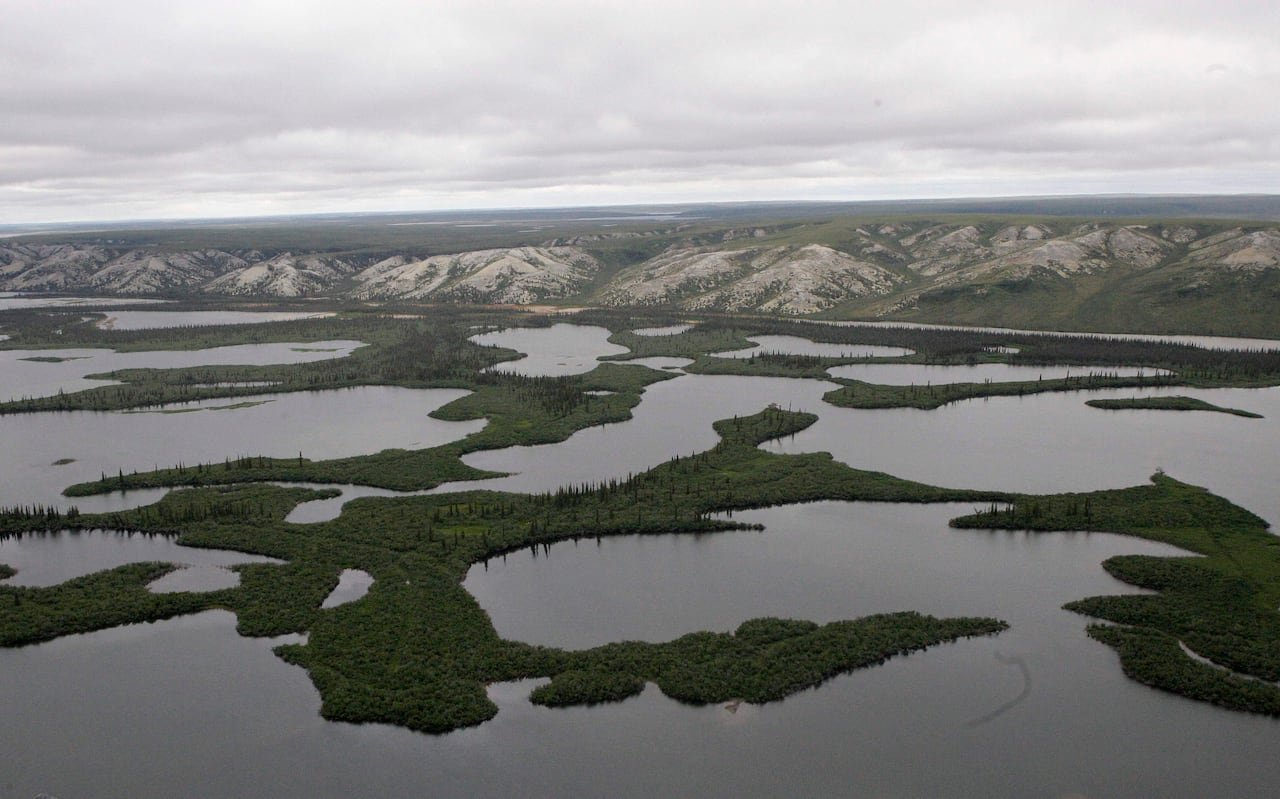
A team of researchers from the UK, Switzerland, and the Czech Republic proposed a concept to submerge mature trees from the extensive boreal forest into the deep Arctic Ocean to sequester their carbon for centuries.
Using computer simulations detailed in a study published in the online peer-reviewed journal npj Climate Action, the scientists investigated the consequences of extracting specific groups of old, fire-prone trees in Canada, Alaska, and Russia. These trees would be transported down six Arctic rivers, such as the Yukon and Mackenzie, and submerged in the Arctic Ocean.
Simultaneously, new, rapidly growing trees would be planted to hasten the absorption of carbon from the atmosphere.
Previously, the same researchers discovered 8,000-year-old trees preserved in low-oxygen Alpine lakes. This discovery suggests that the cold, low-oxygen environment in the Arctic could impede decay, locking away carbon for millennia.
The study indicated that by implementing this process annually in three regions spanning 10,000 square kilometers each, equivalent to just one percent of the boreal forest, one gigaton of carbon dioxide could be extracted from the atmosphere yearly.
Although this strategy serves as a theoretical exercise, the removal of one gigaton is a small fraction compared to global carbon emissions, which amounted to 37.8 gigatons in 2024 alone, as per the International Energy Agency.
Despite the potential benefits of carbon sequestration, such a substantial endeavor must also address the energy consumption and associated carbon emissions required for its execution.
The process involves significant machinery to operate in forests, fell trees, and transport them to rivers. Subsequently, the massive logs must be either loaded onto vessels or floated downstream smoothly. Once in the deep Arctic waters, they must be sunk to the ocean floor.
Traditionally, wood is buoyant. The researchers noted that driftwood typically takes about a year to sink naturally, potentially longer if trapped in sea ice.

Once the multitude of logs are permanently submerged, there is uncertainty regarding the impact on marine organisms residing on the ocean floor.
Furthermore, there are ecological costs to the forest itself. Ecologist Suzanne Simard highlighted in her book, Finding the Mother Tree, that mature trees sustain a diverse ecosystem, harboring mosses, lichens, insects, birds, and a complex fungal network in their extensive

