
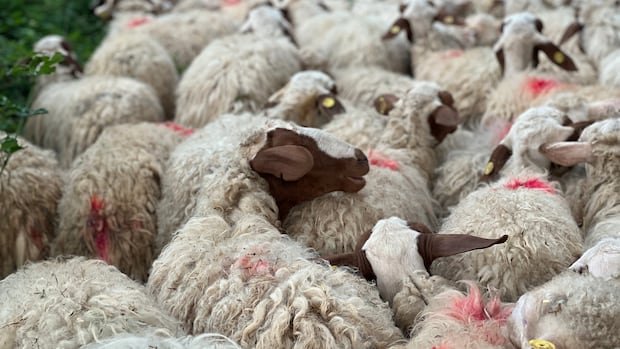
On a breezy autumn day, the softly undulating hills near Rome provided the backdrop for an unexpected gathering. At the farm of Ilaria Venturini Fendi, wool producers, designers, activists, and even model, actor, and farmer Isabella Rossellini, along with her daughter, convened not to celebrate high fashion but to challenge and reimagine it.
Fendi, who tends to 600 sheep at her agriturismo on the outskirts of Rome, highlighted the challenges of wool production in Italy. She emphasized the need for a shift in perspective to reshape economies, as wool, a biodegradable fiber that naturally regulates body temperature, often goes to waste due to high processing costs compared to returns.
The inaugural in-person World Hope Forum, hosted by Fendi, aimed to demonstrate that wool production can be sustainable, ethical, and localized, combating the prevalent practice of burning or discarding wool across Europe and North America.
In the lead-up to the UN’s International Year of Rangelands and Pastoralists in 2026, the event underscored the criticality of safeguarding traditional herding cultures and natural fibers. Additionally, the EU Focus Group is set to convene to explore innovative and sustainable approaches to invigorate the European wool value chain.
Experts like Blátnaid Gallagher from Ireland’s Galway Wool Co-op, focused on revitalizing native Irish wool and advocating for clearer fiber origin regulations in Europe. They aim to reduce dependency on imported wool, particularly from China, which floods the European market and undercuts local producers.
Canadian designer Cynthia Hathaway champions Europe’s shepherding cultures by organizing “soft mob walks” with sheep into urban areas, emphasizing the environmental and cultural significance of wool. Hathaway stresses the importance of transhumance, the seasonal migration of flocks, as a centuries-old sustainable practice that deserves recognition and support.
Despite the declining global wool market, there is optimism for a resurgence of natural fibers. However, stakeholders, like Reina Ovinge, stress the need for enhanced protections for producers and animals. Ovinge’s Knit Wit Stable in the Netherlands exemplifies a micro-supply chain approach, from shearing and sorting on the farm to processing in Italy’s wool hub, Biella, ensuring quality and sustainability.
Isabella Rossellini and her daughter operate Mama Farm in New York, promoting biodiversity and heritage wool through initiatives like Farm to Fashion. While such programs foster community engagement and sustainability, challenges persist due to high processing costs and limited scalability.
Designers like Philip Fimmano advocate for long-term investments in sustainable initiatives. Matteo Mantellassi of Manteco exemplifies circular design practices by producing MWool from recycled garments, reducing CO2 emissions and resource consumption significantly. These efforts are essential for educating young designers and fostering a more sustainable textile industry.

