
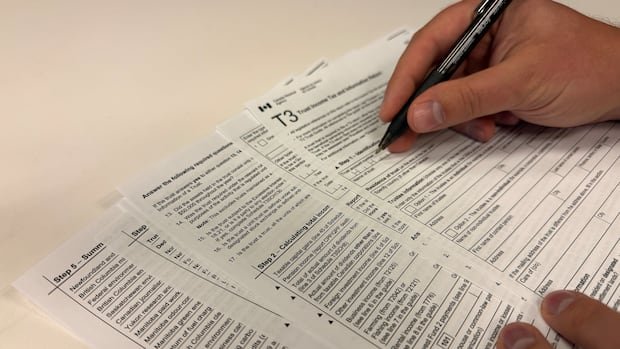
Some individuals who submitted “bare trust” forms to the Canada Revenue Agency in the previous year may have done so unnecessarily as the federal government explores additional adjustments to reporting requirements, potentially leading to another tumultuous tax season, cautioned an accountant.
New tax reporting regulations for trusts were introduced by the government in 2022, scheduled to become effective for the 2023 tax year. Although the rules were implemented to combat issues such as money laundering, terrorist financing, and tax evasion, many Canadians with straightforward bare trusts were unexpectedly required to complete complex forms.
In March 2024, just before the filing deadline, the CRA hastily decided to halt the reporting obligations for bare trusts, citing an “unintended impact on Canadians.” This pause was extended last year as the Finance Department proposed changes to offer clarity to taxpayers.
A bare trust relationship involves a trustee holding legal ownership of a property or asset without beneficial ownership. The trustee’s sole role is to maintain legal title to the property, awaiting instructions from the beneficiary.
Unlike express trusts, which are typically established by lawyers at a client’s request, bare trusts can arise informally, such as when a parent co-signs a mortgage for their child, becoming a partial owner, or when an elderly parent includes their children on a bank account for bill payments.
The proposed adjustments, introduced in August, would exempt specific bare trusts as outlined by the Finance Department. These exemptions include scenarios like true joint ownership, a parent co-signing a child’s mortgage for a principal residence, or spouses jointly occupying a home titled in only one spouse’s name.
While over 44,000 individuals submitted forms before the sudden pause, some of them may qualify for the proposed exemptions, indicating that better consultations could have prevented this inefficient situation, according to Ryan Minor from the Chartered Professional Accountants of Canada.
The taxpayers’ ombudsperson criticized the CRA for the abrupt pause in 2024, resulting in wasted time and effort. A report from François Boileau highlighted that the CRA failed to provide timely and sufficient information for taxpayers and professionals to adapt to the new requirements.
Norman Tollinsky from Thornhill, Ontario, employed an accountant to handle forms for two trusts in 2024. With the evolving requirements, he anticipates only needing to file for one trust moving forward.
The CRA is awaiting the adoption of proposed changes before determining if Canadians will need to file bare trust forms this year. If no legislation is introduced, the CRA plans to explore options to reduce the filing burden for taxpayers and preparers in the 2025 tax year.
Given the limited time for enacting changes, stakeholders anticipate challenges in communicating adjustments to taxpayers effectively. Finance Minister François-Philippe Champagne’s office deferred inquiries about the timing of introducing legislation to the Finance Department, which stated that legislation would be introduced as necessary.

