
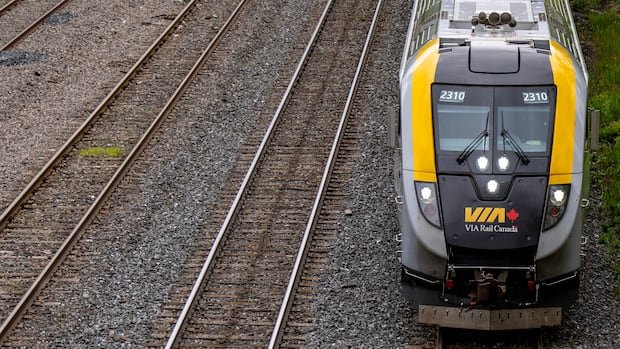
Via Rail has provided $31 million in travel vouchers to numerous passengers who experienced delays of over one hour on their trains since the previous fall, mainly due to new speed restrictions at rail crossings on CN tracks. Passengers traveling on the Quebec City-Windsor corridor, the busiest route in Via’s network, receive vouchers equivalent to 50% of their fares for delays exceeding one hour, with the value increasing to 100% for delays surpassing four hours.
The $31 million in vouchers accounts for seven percent of Via’s total revenues in 2024, underscoring the challenges faced by passengers amidst the prolonged delays following a conflict with CN during the Thanksgiving weekend last year. Jacques Roy, a logistics expert and retired HEC Montréal professor, expressed dissatisfaction with the situation, stating that the penalties are concerning for taxpayers and especially burdensome for travelers, reflecting poorly on the service quality.
CN implemented speed limits at rail crossings used by Via a year ago, citing concerns that their new trains might not trigger safety mechanisms consistently due to their size. Prior to the conflict, 45% of Via trains on the corridor were punctual in August 2024, a figure that plummeted to 29% by August of the following year, posing challenges for passengers relying on reliable transportation services.
Transport Minister Steven MacKinnon criticized Via’s performance as unacceptable, emphasizing the negative impact on passengers and the company’s operational objectives, necessitating a focused effort to enhance service quality. The conflict between CN and Via revolves around the axles on Via’s new Venture trains, which do not meet CN’s requirements for activating safety measures at rail crossings, leading to the imposition of speed restrictions on Via trains.
In response to the unprecedented delays experienced by passenger trains, Via and CN reached a temporary agreement in August to allow trains to operate at a steady, albeit reduced speed over longer distances without the need to confirm safety system activation, aiming to alleviate delays and enhance reliability for passengers. While initial outcomes are promising, Via acknowledges that further assessment is required to address lingering issues.
The ongoing dispute between Via and CN centers on differing perspectives on safety measures at rail crossings and the necessary actions to safeguard passengers. Despite efforts to prioritize safety, both parties remain at odds regarding the severity of the situation and the appropriate measures to ensure passenger protection.

